

Here's a column I've just written published today in the AFR.
The Gruen Transfer
Those with an unusual surname have to get used to spelling it. No its not Gluner. Not Glueball or Grewbie its Gruen G-R-U-E-N. The compensation is, your name identifies you or a family member pretty clearly.
But odd things happen to Gruens. In the 1990s I believe some activists were unable to register The Australian Green Party because it was similar to the Greens. So for over a decade, Gruens marking their ballot papers wondered just who the Australian Gruen Party were, and why they hadnt been in touch.
And now Im getting daily e-mails asking if my finance company is really becoming the Gruen Bank, the first commercial outfit to advertise on the ABC. And what was Andrew Denton doing toasting the camera with a Gruen Beer in hand at the Logies?
You can find out tomorrow night when The Gruen Transfer premiers on ABC TV.
Victor Gruens life was suffused with excitement, achievement, irony and ultimately disappointment. Like my father Fred, Victor was a Viennese Jew who escaped the continent in the 1930s. Victor was also a socialist, an architect and an active participant in Viennese cabaret.
Even with the Gestapo closing in he had an eye for the main chance. A friend donned a Nazi stormtroopers uniform and drove Gruen to the airport. That was the first Gruen Transfer.
Gruen found quick success as an architect in America. A modernist fan of Le Corbusier, he designed enticing storefronts in New York with glass mini-arcades at the entrances to inveigle customers into the shops space whereupon eye level displays would draw them further into the store. They were dubbed mousetraps for customers.
He had found his métier.
He was a strange mix of bombast, restlessness, idealism and megalomania.
His architecture sought to recreate the civic space of the Viennese Ringstrasse in what he feared would otherwise be suburban wastelands.
So naturally enough . . . he invented the shopping mall.
One of his earlier designs from the forties envisaged a mall with 28 shops and 13 civic facilities including a library, post office, theatre, lecture hall, night club, nursery, playroom and a stable.
Gruen proposed a 20 year building program to leading department store firm J. L. Hudson Company starting in Detroit. He proposed the construction of four malls at the (then) fringes of the city Eastland, Northland, Southland, and Westland. Sound familiar?
His next mall in Minnesota in 1956 was hermetically sealed from the elements air conditioned eternal spring. Amongst the shops were fountains, sculptures, arcades and courtyards bathed in natural light where people could meet for a coffee, run into a friend or meet a potential friend or lover. There was even an aviary.
The New Yorker described him as a a sort of intracontinental guided missile with heavy brows, unruly dark hair, and a no less unruly Viennese accent shuttling between five national offices boasting that the merchants in his malls would "save our urban civilization".
Sometimes self-interest has remarkable spiritual consequences. As art patrons, merchants can be to our time what the Church and the nobility were to the Middle Ages.
He proposed banning manufacturing and warehouses from New York and putting all cars and trucks underground. The sooner we helped taxi-drivers leading promoters of urban hysteria to be less hysterical the better.
Gruen even appealed to the zeitgeist of the cold war. His malls were isolated from industrial targets. With the population farcically rehearsing duck and cover drills, the malls could serve as defence centres for rehabilitation, relocation, and first aid.
But like Le Corbusiers modernist utopianism, Gruens industrial dreaming somehow went wrong. Financial pressures squeezed out civic spaces in favour of the rent paying merchandisers. And larger civic developments which were to encircle his malls to make them new downtowns the apartments, offices, parks and lakes and medical centres were never built.
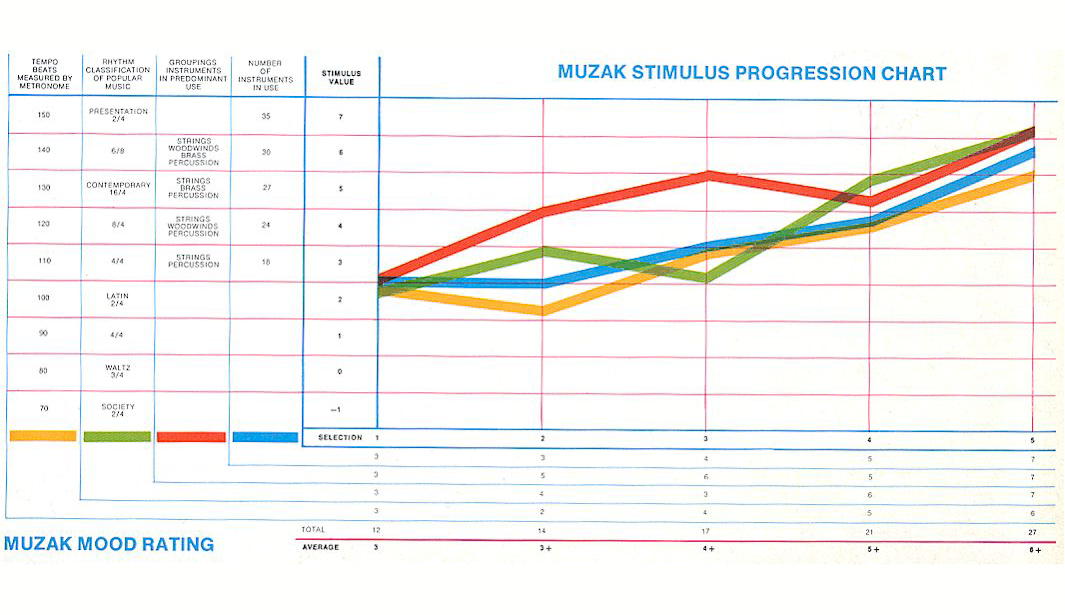
The Gruen Transfer became the psychological jargon for that moment of surrender at which the eyes glaze, the gate slows and the customer yields disoriented to the muzak, the timelessness, the smooth, anodyne décor and the endless arcades.
Gruen ostensibly disavowed this kind of manipulation. But it was a logical extension of his success, and he wasnt beyond explaining to his clients how, by relieving little Mrs Shopper of her suburban boredom one might also relieve her of her cash.
By the late 1960s malls were contributing to urban decline. They sucked out some of the civic and commercial life from the inner suburbs and isolated the more affluent whites in outer suburbs from the inner suburbs growing poverty, racial problems and social dysfunction.
As Detroit and America's other mall ringed cities went up in flames, Victor made another Gruen Transfer, this time back to Vienna where he defended his legacy and lamented what he now called the Sad Story of Shopping Centers.
And the suburban fringe of Vienna housed a new development. A shopping mall.
Gruenster?
Watched it, liked it. Didn't love it, didn't expect to. A reasonable enough use of taxpayer bucks (for those of us who like public broadcasting).
Jacques, comedy certainly is a personal preference, but I find Wil Anderson to be reasonably talented and witty. Not a great star, but better than most of the hacks going around. Anyway, your favourite comedian sucks.
I thought it was ghastly and turned off after ten minutes. Some quite good jokes, but likeability was dipping towards zilch.
Not something then that gruen you?
So you're missing Homer then?