
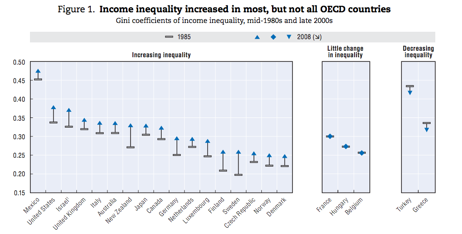
 Source OECD.
-
About
Economic, legal, political and social commentary.
-
Categories
- Economics and public policy (1866)
- Uncategorized (1445)
- Uncategorised (1118)
- Politics - national (1000)
- Politics - international (624)
- History (397)
- Law (383)
- Life (383)
- Philosophy (383)
- Political theory (375)
Show all categories
- Society (300)
- Missing Link (269)
- Cultural Critique (262)
- IT and Internet (258)
- Media (232)
- Education (219)
- Humour (206)
- Films and TV (193)
- Democracy (167)
- Science (153)
- Literature (139)
- Print media (139)
- Innovation (131)
- Art and Architecture (125)
- Politics - Northern Territory (120)
- Health (117)
- Journalism (110)
- Religion (110)
- Environment (103)
- Web and Government 2.0 (98)
- regulation (94)
- Blegs (90)
- Climate Change (88)
- Geeky Musings (86)
- Ned the Bear (77)
- Sport-general (77)
- Chess (73)
- Ethics (73)
- Music (71)
- Bargains (66)
- Social Policy (66)
- Miscellaneous (62)
- Gender (59)
- Coronavirus crisis (56)
- Business (54)
- Death and taxes (53)
- Information (53)
- Social (52)
- Metablogging (50)
- Sortition and citizens’ juries (50)
- Libertarian Musings (44)
- Best From Elsewhere (42)
- Immigration and refugees (41)
- Theatre (40)
- Sport - rugby (37)
- Employment (35)
- Public and Private Goods (32)
- Race and indigenous (26)
- Terror (25)
- Bullshit (23)
- Inequality (23)
- WOW! - Amazing (23)
- Intellectual Property (22)
- Medical (21)
- Dance (20)
- Interesting Graphs (20)
- Ask Troppo's Love Gods (19)
- Parenting (19)
- bubble (16)
- Competitions (16)
- Food (16)
- Indigenous (15)
- Methodology (14)
- Sport - Rugby League (14)
- Space (12)
- Isegoria (10)
- Personal (10)
- Blogs TNG (9)
- Travel (9)
- Intellectual Monopoly Privileges (8)
- Review (8)
- Site News (7)
- Firms (4)
- Criminal law (3)
- Products (2)
- recovery of old post (2)
- repost for the record (2)
- War and military (2)
- Startup (1)
-
Archives by Year
-
Posts by Author
- Nicholas Gruen (3063)
- Ken Parish (1440)
- Don Arthur (505)
- Paul Frijters (347)
- Mark Bahnisch (272)
- James Farrell (159)
- Tony Harris (152)
- Geoff Honnor (136)
- David Walker (124)
- Richard Tsukamasa Green (121)
- Fred Argy (113)
- Wicking (110)
- Wayne Wood (105)
- Rex Ringschott (95)
- Sophie Masson (67)
- Cam (63)
- Ingolf Eide (52)
- Scott Wickstein (43)
- Unknown (34)
- Chris Lloyd (33)
- Paul Bamford (aka Gummo T) (33)
- Stephen Hill (24)
- john r walker (20)
- Patrick (20)
- Rafe Champion (18)
- Saul Eslake (16)
- Shaun Cronin (16)
- Roop Sandhu (13)
- Dr Troppo (12)
- Peter Whiteford (12)
- Antonios Sarhanis (10)
- Bruce Bradbury (10)
- Backroom Girl (7)
- john Walker (7)
- Danielle McCredden (6)
- B Model Baby (5)
- Damian Jeffree (5)
- Gaby (5)
- Julia (5)
- Seamus C (5)
- JC (4)
- Luke Slawomirski (4)
- Paul Watson (4)
- James Wheeldon (3)
- Jen (3)
- Paul Martin (3)
- Darlene (2)
- davidsligar (2)
- ellenbroad (2)
- Mike Waller (2)
- David Coles (1)
- Joshua Gans (1)
- meika loofs samorzewski (1)
- Sam Roggeveen (1)
So I can't help wondering if moderate increases in inequality aren't such a bad thing after all.
The OECD has Australia as the best place to live with increasing inequality. Not sure where Greece and Turkey rated, but I'm guessing not very high, and they're the only countries with decreasing inequality.
Complex issues certainly. But the top places to live, according to the OECD, also have increasing inequality.
A better strategy might be to look at how well the increase from the previous point predicts advances/declines in useful variables. For example, NZ and Sweden appear to have had the largest increases, and so one might look at whether this benefitted them over and above countries like Aus that had smaller increases.
Of course, if there are some relatively optimal bounds (as seems likely), then it would be interesting to see if Sweden benefitted and NZ did not, in which case one might predict NZ was going over these bounds and Sweden was not.
Unfortunately, whilst these predictions seem nice in theory, getting rid of all the confounds, or indeed picking the variables that are deemed important and over what time-span must be especially difficult. Things like the effects of entrenched inequality which span across generations come to mind here. These might not show up in short term movements in inequality, but they become great problems in the longer term.
I agree you'd need to look at it in some detail, but even then the case would never be clear enough to draw many solid conclusions. An alternative would be time - long term: which countries rate as the 'best' and what's the correlation (if any) with gini coefficient changes.
It would be interesting to see in what circumstances inequality usually decreases (if there is any pattern). Is the path most trodden one to relative poverty or wealth?
Most of the inequality increase, in Australia at least, is due to the extraordinary increases in the income of the top 5%. It's not just the private sector though that is the main culprit. How can we justify paying $844,000 to the head of Prime Minister's and Cabinet? And the senior executives below them are pegged to the levels at the top. We see it also with the CEOs(!) of universities and specialist medical practitioners to use just 2 examples of where we as a society have lost control of remuneration package increases. I honestly don't understand why we as a society have allowed this.
How do we stop it ? It seems to have a inexorable internal logic...
The logic is external: a large portion of the population wants to be led by a class of superiors, and the way superiority is recognised is through money.
Those people don't see inequality. They see a fairly-remunerated leadership class, and vote to maintain it.
JG, how do we justify paying the CEO of AustPost $4.8 million. Is the job worth that much ?
And given the paper mail division is almost broke, it seems a reduction of the CEO pay is in need (not blaming the CEO for that -technology has caused it).
The only way to get some decency in the pay amounts of CEOs paid more than $1 million is to increase tax progressively to 60%