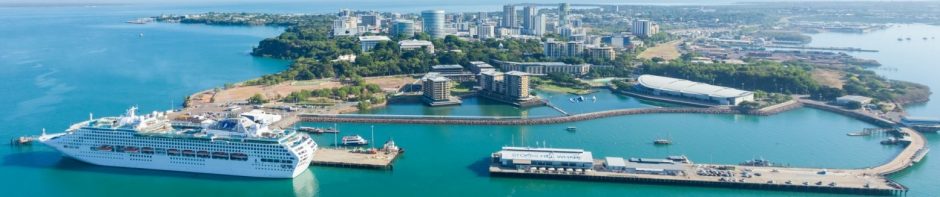
Big business lobbyists and greedy foreigners are turning Sydney into an overcrowded hell hole, says Clive Hamilton . In Saturday's Sydney Morning Herald Hamilton draws on John Calhoun's famous rat experiments to argue that Sydney risks becoming a ' behavioural sink ' -- a city...
Continue reading →
[photopress:Rand_Window3_1_2.jpg,thumb,alignleft] Ayn Rand despised Friedrich Hayek. In a letter to Rose Wilder Lane she described him as "an example of our most pernicious enemy". At Thoughts on Freedom, Andrew Russell takes issue with some of my earlier comments on the Rand/...
Continue reading →
I took Alexander (my son) to the Australian Chess Championships being held in Canberra the other day. There on the top boards were four Grandmasters playing (I think Australia only has two - and both were there - Ian Rogers and Darryl Johansen.) Now I wouldn't be telling Tropp...
Continue reading →
Earlier this week I downloaded Mozilla Firefox and started using it as my default browser. However its inbuilt version of Google is much more primitive than the Google Toolbar I've been accustomed to using with Internet Explorer. Accordingly I tried to install the new Google T...
Continue reading →
Some weeks ago, Tim Blair, in his ongoing quest to ridicule Global Warming out of existence, decided to take a swipe at influential UK columnist George Monbiot. If you don't know of Mr. Monbiot he appears to be a very impressive fellow . He has led a very exciting life, having...
Continue reading →
Last night I happened upon a chapter by Murray Rothbard in a book called " Dissent on Keynes: A Critical Appraisal of Keynesian Economics . It was published in 1992 and the web version was published in 2003 and available here. The brief? Well roughly the brief Junie Morosi int...
Continue reading →
Not content with continually revealing his true identity to the world, one of his seemingly numerous enemies has now gone and stolen Anonymous Lefty's blogs !! I hope for his sake Lefty backed up the contents regularly. I also hope Blogspot proprietors Google take the matter s...
Continue reading →
For those members of the Barmy Army who are over here and overawed. Spiked columnist Ethan Greenhart had some advice for you , which apparently you ignored. Flying to Australia is never acceptable.
Continue reading →
I was watching Rage while polishing off a bedtime snack and saw a video that I though was going to annoy me - but turned out to amuse me - and indeed to make me smile and feel good. And of course it's on You Tube. The city it's filmed in turns out to be Sydney as I realised wh...
Continue reading →
For only a few more days the podcast of Richard Dawkins reading from his book is up at the ABC website . I listened to this when it was first broadcast, and while it didn't change my mind about Dawkins and his enterprise regarding religion and though he didn't really discus th...
Continue reading →
According to ex-Secretary of Defence Donald Rumsfeld, there is no reason to disbelieve in the existence of Santa. Please pass this message on to sceptical children. Dear Mr Rumsfeld, I am 8 years old. Some of my liberal friends say there is no Santa Claus. Daddy says "If Donal...
Continue reading →
From yesterday's AFR. It is the week before Christmas. Political programs such as the ABC's Insiders have ended and John Clarke and Brian Dawe have retired for the year to join an audience distracted by the summer. But this inattentive season is also the time for ministers to...
Continue reading →
What I should be avoiding at Christmas (but won't) It's getting increasingly difficult to compile Missing Link , what with so many bloggers announcing a Christmas hiatus. And it's been even harder this morning, because Google's Blogger service seems to have been playing up, ma...
Continue reading →
A friend Alex sent me this op ed by Polly Toynbee of the Guardian . I confess to being a bit irritated with the way it started off. "Fat is a class issue, but few like to admit that most of the seriously obese are poor." This actually gets to the nub of a crucial issue, but I...
Continue reading →
Op edders that is. Anyway, below the fold is an op ed of mine the Age published today ostensibly on Kevin, which was foreshadowed to Troppodillians here . In it I try to argue that all this stuff about the importance of projecting values in politics can be turned to good effec...
Continue reading →
After watching a replay of a Geraldine Doogue interview with Heavy Kevy on Compass last night, I find it increasingly difficult to credit Amanda's and Chris Sheil's hypothesis (developed on this thread here at Club Troppo) that he has already endeared himself to the general po...
Continue reading →
(via Sarsaparilla ) If you haven't checked out "Sublimely Gothic Cowgirl" and her blog Poligoths , now's the time. This cowgirl is a black belt Photoshopper. Probably my favourite is Amanda Vanstone (right) as Mistress of the Dark, followed closely by Phil Ruddock as Lord of t...
Continue reading →
Following its mooting on Troppo a few days ago, we're planning to (hastily) compile a Best Blog Posts for 2006. Online Opinion has indicated an interest in hosting the collection (and we can cross post it with links on other blogs). We're e-mailing a bunch of bloggers inviting...
Continue reading →
I was recently talking to Dennis Glover who told me of his October op ed equating the right commentariat with old style Marxists, making the pretty obvious point that most of them began as Marxists. I'd missed it when it appeared. It's makes a large number of good points so it...
Continue reading →
Andrew Leigh has a post on an ANU award for great teachers . This is a Good Thing. While I'm in full cry about the forth arm of government - the 'suasional' arm of government - I wondered why the ALP didn't give out awards like that. Couldn't do them much harm. Could do them s...
Continue reading →
Howard's End? Matthew Talbot Hostel for Homeless Politicians, as imagined by Aussie Bob at Road to Surfdom There hasn't really been any clearly dominant issue in the political blogosphere over the last couple of days. I suppose it reflects the onset of the Christmas silly seas...
Continue reading →
The collected papers from the 2002 Popper conference in Vienna are now available at the cost of an arm and part of a leg. See if anyone here can manage some more intelligent comment than the parade of puns at Catallaxy .
Continue reading →
[photopress:OneWay.jpg,full,centered] At Larvatus Prodeo Mark Bahnisch argues that Team Rudd is blurring the differences between Labor and the Coalition and driving left-leaning voters back towards the Greens, Democrats and independents: So much for product differentiation, Ru...
Continue reading →
Palm Island residents riot over 'Mulrunji's' death in November 2004. Photo: ABC Chloe Hooper's The Tall Man really is one of the most powerful essays in The Best Australian Essays 2006 , which I reviewed earlier this week . It tells the story of the inquest into the death of '...
Continue reading →
I'm writing an op ed which argues that there's more to politics than policy. Well that's not news particularly in this age of 'values based' politics. But I want to develop an argument I began in this this essay in these terms. We are taught that there are three arms of govern...
Continue reading →
As Andrew Landeryou reported at 4:11am (and The Age at 8:13am), last night's Victorian Legislative Council recount in several seats resulted in the DLP indeed losing the last seat in Northern Metropolitan to the ALP, apparently as a result of 6000 Green preferences which had p...
Continue reading →
Looking at some consulting work on regulation I hunted down something I'd seen before - the Business Costs Calculator . This seems like a sensible initiative which is designed to provide a template through which those engaged in 'regulation review' activities can be taken thro...
Continue reading →
Warm relationship between Beattie and Gillard - a particularly disturbing photo from Landeryou's blog I'm generally very wary of linking to Andrew Landeryou's blog because it's so full of material that appears to be seriously defematory. However, he's currently running a story...
Continue reading →
Balancing Work and Family , the recent report from the House of Reps Standing Committee on Family and Human Services contains a version of one of my favourite pictures. (I've posted my own version below the fold.) The figure shows how labour force participation has changed for...
Continue reading →
The [US] National Venture Capital Association released a study titled: American Made. The impact of immigrant entrepreneurs and professional on US Competitiveness [PDF] . The report studied venture capital backed public and private businesses consequently it does not cover imm...
Continue reading →
Victorian fires - Photo: Cameron Quinten, an Age reader The death of former Chilean dictator Augusto Pinochet, Howard's citizenship test, the DLP winning two seats in Victorian's Upper House courtesy of ALP preferences(!!!), the latest Newspoll and the Victorian bushfires are...
Continue reading →
I've known that George Bernard Shaw had a thing or two to say about conflicts of interest in the medical profession, about how doctors have a direct pecuniary interest in providing you with services (for which they charge a fee) rather than in keeping you well (in which case t...
Continue reading →
A Beautiful Mind? If you've never taken much of a look at Andrew Bolt's columns in the Herald Sun, you may wonder which category of columnist he falls into. Is his the anger of a sharp mind frequently impatient with the foolishness of those around him - Melbourne's own Tom Wol...
Continue reading →
There's been a bit of discussion both here and at Lava Rodeo about the possibility of compiling a Best Australian Blog Essays 2006 anthology. Efforts in that regard are afoot. But what about best comments? This one from Nabakov over at LP (about Howard's Oz culture citizenship...
Continue reading →
These are detainees held in Santiago's National Studium after the coup, awaiting an uncertain, and in some cases hideous, fate. Thinking about them, should we be sorry that Pinochet managed in the end to evade a trial and sentence? Or should we rejoice that at least he lived l...
Continue reading →
When Nicholas Gruen asked me to review The Best Australian Essays 2006 published by Black Inc (in which his essay on Adam Smith - workshopped right here at Club Troppo earlier this year - features), the first question I asked myself was a really basic one. What is an essay? No...
Continue reading →
Smoke over Victoria as at Friday - I guess it was much worse by yesterday - image via David Tiley Touring around the blogs this morning reveals that there are quite a few who have stowed away the keyboard early for the Christmas break. Fortunately there are still lots who cont...
Continue reading →
I think Ken will shortly be posting a review of Best Australian Essays published by Black Inc , but as I'll be leaving Melbourne towards the end of next week I thought I'd post this here now. As a contributor I've got rights to copies at $12 a pop, so if any Troppodillians wan...
Continue reading →
� Mr Rudd by Colin Wicking The media is inevitably full of predictions about the Rudd/Gillard Labour leadership. What follows is the case for flipping straight to the sports pages. Because none of the punditocracy have much of a record of accurate judgment in the week after...
Continue reading →
Would you vote for this woman? Or read her column? Don Arthur did (the latter anyway) ... I wonder why Miranda hasn't lectured Julia Gillard on her hairstyle yet? Why bother with scholarly research when you have television? In a recent study , Amy King and Andrew Leigh found t...
Continue reading →
Back in 2003, Federal Liberal MP Sophie Panopoulos (now Mirabella) was keen to see that Australian "terrorist" David Hicks "paid for his crimes". Her eagle eye had spotted that Hicks' father Terry was trying to beat up sympathy for his son. In an attempt to attract sympathy,...
Continue reading →
Google is closing down a great experiment called Google Answers in which Google acted as a broker for research assistance. If you've not seen it, you posted a question and offered a fee, and if someone wanted to they responded - for 75% of the fee with Google taking the rest....
Continue reading →
I've started using Google reader which, in case you don't know about it, is a great way to read blogs. Joshua Gans told me about it pointing me to the link on his own blog which shares interesting links through Google Reader. This took me to this link and thence to this speech...
Continue reading →
Just remember. This link brought to you and endorsed by Club Troppo. Home of middle aged grumpy respectability .
Continue reading →
Yes folks - it's the new swiss army knife - link overleaf
Continue reading →
No caption needed really ... There hasn't really been a particular obsession in the blogosphere over the last couple of days. A few more Rudd posts, of course, but it looks like bloggers might have joined the pollies in heading off for summer holidays. I certainly hope not, ha...
Continue reading →
What do Schapelle Corby and John Howard have in common? (hint see Hansard page 54) What is it about Northern Territory politicians and fridges ? Why didn't I realise that Miranda Devine was right ? [ NB not work-safe ]
Continue reading →
I was alerted to this funny story on Late Night Live. When the London Review of Books began taking personal ads, the content was quirkily British - as for instance in the ad from which I took the heading. ""Bastard. Complete and utter. Whatever you do, don't reply - you'll onl...
Continue reading →
When I went from year 10 to year 11 at high school, I also moved cities and schools. I moved from a private boys school - Haileybury College in Keysborough (Vic) - to a co-ed High School in Canberra - Campbell High. I remember arriving at Campbell and spending lunchtime during...
Continue reading →
Adrian the Cabbie photoblogs a truly dreadful Christmas decoration at Sydney's (usually uber-trendy) Double Bay Most readers won't be surprised to learn that Rudd, Fiji and the cricket are the most common blogosphere themes of the last day or two. I'm only extracting a tiny se...
Continue reading →
In the late 1500s England was rising as a maritime nation. It was beginning to dominate the important technologies of cartography and longitudinal calculation. In 1598 Edward Wright produced the most accurate map the world had seen. Apart from using the new technology of Merca...
Continue reading →
Some people are little grumpy before they've had their first cup of coffee. And maybe that's why Sunrise co-host David Koch got so many complaints when he repeated this joke at 6:50am. But how risqué can a joke be if versions of it have appeared in respectable magazines like t...
Continue reading →
The increasingly farcical Milne versus Mayne prizefight at last Thursday's Walkley Award presentations has taken an even more bizarre but very entertaining twist. Yesterday the Poison Dwarf came out with a very funny piece titled Why I snapped on live TV . It blamed Mayne for...
Continue reading →
Looks like Rowen favours the Dream Team The Labor leadership spill result will be known by the time I post this (update - fairly predictably it's Rudd ), so there's no point in posting links to the predictably huge volume of blogosphere comment on Bomber versus Rudd. A couple...
Continue reading →
Michael Duffy thinks we live in a meritocracy -- a society where everyone gets the income they deserve. But in the Duffyverse, evil genius Lex Luthor would be more deserving than Superman . Why? Because Luthor has a higher IQ . Duffy argues that Australia has a new upper class...
Continue reading →
The December 1st Senate Hansard had an interesting exchange during the debate over the Independent Contractors amendment to the behemoth Workchoices legislation. First Andrew Murray ; As the chamber knows, various state legislatures have attempted to grapple with this but at t...
Continue reading →
Not the football team you galahs, this man .
Continue reading →
Pursuant to Ken's ambition to make CT Australia's premium soccer and opera blog, it's my duty to announce that Opera Australia's production of Giulio Cesare launched its Melbourne season tonight. This is probably the best known of Handel's fifty or so operas, and, if that were...
Continue reading →
Well he was on Seinfeld anyway. Some people may have seen this before but, having heard about it on the radio recently I looked it up on YouTube. Truly shocking. Nice to see the audience filing out as he sank deeper into the mire.
Continue reading →
It was utter madness on the streets of Melbourne this evening, as literally tens of people listening to Huggy on the Gold FM, drive time, Bread back-to-back retrospective were thrust rudely into the new millennium by the shocking but welcome news that Shadow Foreign Minister K...
Continue reading →
I posted on this last year and it's worth mentioning it yearly. A lot of stuff gets exchanged each year that's pretty useless when we could give gifts to each other of donations to causes that could really do with the money. This would have had the assent of most economists be...
Continue reading →
The Bomber among friends yesterday, but how many will he have in Caucus next week ? We'll add links here to developing blogosphere coverage ... Just in case you thought Wednesday's first Missing Link feature was a fluke and doubted that the blogosphere really does consistently...
Continue reading →