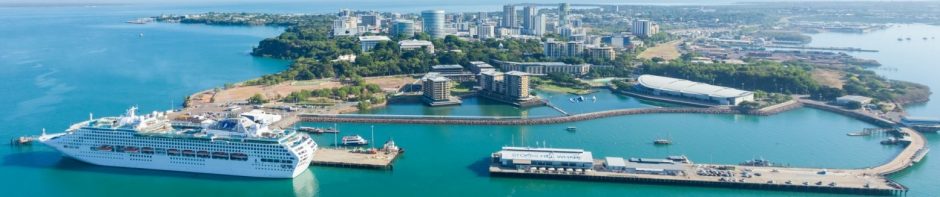
Most credible researchers believe immigration affects house prices. The questions are: how much, and at what cost? This post aims to establish some baseline facts on the basis of which sensible arguments can be made about immigration and housing. Key points: Academic research...
Continue reading →
Scott Morrison's "secret powers" are being heralded in much of the media as proof that he was up to no good. The simpler explanation is that on governance issues, he was often just not much good. "No worries, mate; I'm just nominating us both for Australia's official list of b...
Continue reading →
My exposure to British journalism has been a bit of a culture shock. When I write for the FT there are fact checkers, who don't just check but add value with charts. The sub-editor gets back with proposed redrafts to clear them with me. Apart from picking up some spelling erro...
Continue reading →
It's here, the booklet I am sure you have all been waiting for. The one which Gigi Foster and Michael Baker slaved over for 10 months . It is also on Kindle . It is dedicated to all the victims of the Panic, in poor countries and rich countries. They include our children, the...
Continue reading →
Posted in Politics - national, Politics - international, Life, Philosophy, Print media, History, Humour, Education, Literature, Society, Religion, Theatre, IT and Internet, Economics and public policy, Terror, Science, Journalism, Media, Libertarian Musings, Health, Political theory, Law, Dance, Review, Bargains, Travel, WOW! - Amazing, Social, Parenting, Ethics, Medical, Public and Private Goods, Death and taxes, Inequality, Social Policy, Democracy, Employment, Sortition and citizens’ juries, Isegoria, Coronavirus crisis
What do you do as an Australian parliament when a foreign company censors mainstream media content in Australia, undermining free speech ? Do you organise an inquiry to hold those foreign companies to account and to see how you might prevent foreign meddling? Or do you fall in...
Continue reading →
Posted in Politics - national, Politics - international, Print media, Society, Films and TV, IT and Internet, Journalism, Media, Cultural Critique, Democracy, Coronavirus crisis
The legislated "bargaining" process between Google and News Corp is unmoored from reality. Its "final offer arbitration" is unsuited to the task. [caption id="attachment_34634" align="alignleft" width="300"] He's loaded the gun. (Photo provided by Eva Rinaldi on Flickr; CC BY-...
Continue reading →
How are we going to escape the authoritarian nightmare and regain our liberties and zest for life? This long read is written for organisers of new Covistance initiatives, explaining the logic of what others have done and what could further be done. So I am speaking to those of...
Continue reading →
Posted in Politics - national, Politics - international, IT and Internet, Science, Journalism, Media, Libertarian Musings, Geeky Musings, Health, Law, Information, Parenting, Death and taxes, Democracy, Coronavirus crisis
[Bottom line: the conflicting forces now being created in the UK and Australia are truly frightening.] The UK government has just announced a nationwide return of one of the most destructive elements of lock downs: mandatory social isolation. Gatherings of more than 6 people a...
Continue reading →
Posted in Politics - national, Politics - international, History, Society, Science, Journalism, Libertarian Musings, Health, Law, bubble, Social, Cultural Critique, Inequality, Social Policy, Democracy, Coronavirus crisis
The management of the University of Queensland, and in particular Peter Hoj and Peter Varghese, stand condemned today by the international media, by both Labor and Liberal politicians, by both left-wing and right-wing Australians, by its own students, and by the powerful pro-...
Continue reading →
Let’s talk about some of the covid policy options facing Australia in the coming months and years. It seems to me we can either grasp the nettle and accept we will get a wave of highly visible covid-19 deaths before life returns to normal, or we can try and defend ourselves ag...
Continue reading →
Posted in Politics - national, Politics - international, Life, History, Education, Economics and public policy, Journalism, Libertarian Musings, Health, Death and taxes, Democracy, Employment, Coronavirus crisis
In a week from now, UQ student leader Drew Pavlou will face an internal hearing at the University of Queensland to decide whether or not he will be expelled for having organised rallies against various pro-China organisations on campus and generally being a pain in the *rse of...
Continue reading →
Posted in Uncategorized, Politics - national, Print media, Journalism, Libertarian Musings, Law, Race and indigenous, Cultural Critique, Inequality, Democracy, Indigenous
For almost a century the royal road to becoming a top politician in Anglo-Land was to study law and/or a bit of economics. In Australia that was the ticket for Keating, Hawke, Gillard, Howard, and Turnbull. In the US, that mold fit Obama (law), Clinton (law), and both GHW and...
Continue reading →
[I just read a self-help book and, like Don Quixote, need to vent...] My 10 rules for becoming a successful guru: Appear popular at the start : humans are just like dogs that follow other dogs. So have a legion of disciples and followers. Make them up when you start out. Don’t...
Continue reading →
Posted in Life, Society, Theatre, Journalism, Libertarian Musings, Geeky Musings, Law, Space, bubble, Social, Ethics, Cultural Critique
Cross-posted from John Menadue's Pearls and Irritations . The ABC has been an extraordinarily resilient organisation. It has withstood management and Board upheavals, survived remorseless budget cuts and harassment. But the current attacks on staff and on its role are as overt...
Continue reading →
Sometimes, it feels like 1910 all over again. Then, a confident Germany was the up-and-coming industrial power house, fearing an even more up-and-coming Russia, with the UK and France desperately holding on to their colonial empires. Now, a confident China is the up-and-coming...
Continue reading →
Posted in Politics - national, Politics - international, Philosophy, Environment, History, Miscellaneous, Humour, Society, Religion, Sport-general, Theatre, Music, Economics and public policy, Science, regulation, Gender, Journalism, Media, Geeky Musings, Climate Change, Political theory, Business, Travel, Immigration and refugees, Information, Intellectual Monopoly Privileges, Innovation, Social, Race and indigenous, Ethics, Cultural Critique, Public and Private Goods, Death and taxes, Inequality, Social Policy, Democracy, Bullshit, Indigenous, Employment
Senator Nick Xenophon, a man of great integrity, has reportedly struck a deal with the government over media reform. One aspect of it, as reported by The West Australian , is that the the government will subsidise 200 journalism scholarships of up to $40,000 a year. (I have no...
Continue reading →
Let me indulge, purely for entertainment value, in some fan-speculation on what we will see on-screen after the Long Night is over and the final 6 episodes Of Game of Thrones are run in 2019. Let me first talk about the end-game aspects I think the books and the tv-series seem...
Continue reading →
Posted in Uncategorized, Uncategorised, Politics - international, Life, Philosophy, Print media, Environment, History, Miscellaneous, Humour, Education, Literature, Society, Religion, Films and TV, Sport-general, Theatre, Music, IT and Internet, Economics and public policy, Food, Terror, Science, Art and Architecture, regulation, Gender, Journalism, Media, Libertarian Musings, Geeky Musings, Health, Climate Change, Political theory, Metablogging, Law, Dance, Space, Review, Startup, Products, Travel, Immigration and refugees, Information, bubble, WOW! - Amazing, Social, Parenting, Race and indigenous, Ethics, Cultural Critique, Medical, Public and Private Goods, Death and taxes, Inequality, Personal, Social Policy, Democracy, Bullshit, Indigenous, Employment
In part 1, I looked at whether it made sense to have random individuals inserted into parliament, or to let policies be decided by juries full of randomly chosen individuals. Both were argued to be unworkable and likely to lead to more corruption, rather than less: policies th...
Continue reading →
Posted in Politics - national, Life, Philosophy, Print media, History, Miscellaneous, Education, Society, IT and Internet, Economics and public policy, regulation, Journalism, Libertarian Musings, Political theory, Law, Web and Government 2.0, Information, Ethics, Cultural Critique, Social Policy, Democracy
[youtube http://www.youtube.com/watch?v=gmOvEwtDycs] Here at Troppo we have referred to the 'Yes Minister series' many times because of its brilliant commentary on the timeless issues of government, exemplified in the skit above. I have gone through three phases with the serie...
Continue reading →
Posted in Life, Philosophy, Humour, Society, Economics and public policy, Journalism, Libertarian Musings, Geeky Musings, Political theory, Review, Ethics, Cultural Critique, Democracy
I am seeking a lawyer to run an Adverse Action case connected to the recent Fair Work Commission verdict that found systematic breaches of procedures and procedural fairness in the University of Queensland's actions against me following my research on racial attitudes in Brisb...
Continue reading →
Posted in Life, Economics and public policy, Science, Journalism, Media, Blegs, Law, Competitions, Race and indigenous, Ethics, Cultural Critique, Inequality, Personal, Social Policy
With Fairfax culling 120 journalists (in the wake of previous mass redundancies), Murdoch/News apparently contemplating more cuts, and newspapers in general losing money hand over fist, some pundits are suggesting that Fairfax at least is likely to stop publishing the Monday t...
Continue reading →
I visited Turkey in April last year, traveling through the country, witnessing the troubles of the leadership of the ruling AKP party: it had just lost a general election that left it without a workable majority in parliament and only 40% of the popular vote; it was sucked int...
Continue reading →
Posted in Politics - international, Print media, History, Miscellaneous, Society, Economics and public policy, Terror, Journalism, Political theory, Immigration and refugees, Ethics, Cultural Critique
Queensland boy Julian Assange seems set to walk out of the Ecuadorian embassy soon, hoping that the announcement by the UN human rights panel on the arbitrariness of his detention will protect him from being arrested. The baseline scenario is that he walks out, is quickly arre...
Continue reading →
Posted in Politics - international, Life, History, Society, Journalism, Media, Libertarian Musings, Law, Information, Ethics, Cultural Critique
As I've argued elsewhere, most public debates on policy - and I suspect on pretty much everything else - tend to take place as culture wars. In a culture war the 'sides' are well defined - usually mapping pretty well onto 'left' and 'right' terrain. The identities of the vario...
Continue reading →
The HALE index got a bit of attention this weekend owing to the way in which it highlights the cost of long-term unemployment. It's certainly a graphic illustration of the way in which GDP hides important developments from us. Mostly what people like about the HALE is the way...
Continue reading →
Ben Hills has a new book out - Stop the Presses! How Greed, Incompetence (and the Internet) Wrecked Fairfax . It's published by (surprise!) News Corp's HarperCollins. Its essential thesis is that the Fairfax media group, owner of The Sydney Morning Herald and The Age, is in tr...
Continue reading →
Much of the time, the public can make up its own mind on public events once it get a decent helping of facts; the theatre commentary from the parliamentary press gallery – a little of which I used to write – is more entertainment than vital input. But on the running of the par...
Continue reading →
http://www.youtube.com/watch?v=NluKzkEuo3A As part of its Gruen Nation show, an ad was produced which Clive Palmer wanted to use in his campaign. Well it was public money that produced it, so why shouldn't he be able to use it? Now in fact there may be complications. Gruen Nat...
Continue reading →
Investigative journalism and the secret state are natural enemies. Even with an enlightened government and relatively untroubled times, their relationship will be uneasy at best. Today, they're in a state of undeclared war. Surveillance states and most of their fellow travelle...
Continue reading →
Troppo readers who have followed my meanderings about asylum seeker policy over the years will realise that I have some fairly basic differences with the Greens on that issue ((although not on the fundamental fact that many if not most of them need our compassion and support –...
Continue reading →
Interlude: Ruminations on 'the costs of speech', monkeys and Dexter In The 2013 PEN Free Voices lecture, reproduced on the ABC's Religion and Ethics web site , Waleed Aly makes the following observations on Freedom of Speech: … let us grind this out, beginning with a trite obs...
Continue reading →
A Peculiarly Australian Cause Celebre In one of the less nebulous sections of the Liberals' curiously fisk-resistant manifesto i , you'll find this special promise for Andrew Bolt and his fans and supporters: Protecting freedom of speech – supporting an open media We will prot...
Continue reading →
The graphic below comes from the University of Michigan's Professor Mark Perry, who runs a libertarian and market-oriented blog called Carpe Diem . It shows, essentially, the collapse of the advertising revenue stream in US newspapers. Adjusted for inflation, US newspapers wil...
Continue reading →
In the torrent of words over the job cuts at Fairfax and News Ltd, not many people seem to have noticed that these events also further undermine the already teetering argument of the Finkelstein Review for a new system of media regulation. How's that? Recall that the Finkelste...
Continue reading →
This week's dramatic events in the Australian media have underscored the Schumpeterian "creative destruction" being wrought before our eyes by the Internet and associated technologies and cultures: Fairfax's announcement of the sacking of 1900 staff, closure of print facilitie...
Continue reading →
As Ken Parish's post below shows, there is now a widespread view that Gina Rinehart will win control of Fairfax , publisher of the Sydney Morning Herald and The Age, and then seek to move their editorial stances well to the right. From people who believe that, you hear both wa...
Continue reading →
Journalism academic Terry Flew blogs about a recent paper by a UK colleague: Recently published on Open Democracy has been an influential paper by Angela Phillips on “ The Future of Journalism “. The paper was presented at the Media, Power and Revolution: Making the 21st Centu...
Continue reading →
Last week I was ready to write off ABC Melbourne interviewer Jon Faine for ill-judged rudeness and inadequate research . Now he's gone and redeemed himself with a Tony Abbott interview . Faine at his best is smartly, aggressively prosecutorial without actually being rude. Abbo...
Continue reading →
The bank debate now seems officially out of control. Increasingly foolish notions about banking are being served up day after day. One example: the developing meme that claims the banks have decided they will no longer be bound by official interest rate policy. One morning las...
Continue reading →
Right now Ray Finkelstein and Matthew Ricketson, the two members of the federal government's Independent Media Inquiry , are trying to finish off their report to the government. It's due by 28 February. Writing these reports is frequently difficult, but Finkelstein and Rickets...
Continue reading →
When New York Times public editor Arthur Brisbane asked whether Times reporters should challenge the 'facts' asserted by the newsmakers they write about a large majority of readers responded : "yes, you moron, The Times should check facts and print the truth." That's pretty mu...
Continue reading →
With the Media Inquiry in full swing and the Greens' Bob Brown complaining loudly about News's lack of fairness and accuracy , now might be a good time to travel back in time 20 years. Let's visit another era when a powerful paper was unashamedly boosting one side of politics...
Continue reading →
[Cross-posted to Online Opinion ] I spend my working life running an online media firm - WorkDay Media, publisher of Banking Day - with its owner and editor-in-chief, Ian Rogers. Last month, Ian and I wrote a submission to the federal government’s Independent Media Inquiry. Yo...
Continue reading →
I usually disagree with recently reborn RWDB blogger Professor Bunyip, and his potshots at this week's principal witnesses in the Finkelstein Press Inquiry aren't exceptional in that regard. But I have to confess (not for the first time) to taking a certain guilty pleasure at...
Continue reading →
Back in 2006 UK rumour-monger Guido Fawkes boasted that the news is no longer defined by big media . Laurie Oakes is afraid he's right. In his 2011 Andrew Olle Media Lecture , Oakes predicts that bloggers will soon be determining what is news. He says that political commentato...
Continue reading →
New post by me at CDU Law and Business Online . An extract: Moreover, yesterday’s behaviour by Murdoch’s Brisbane Courier-Mail of publishing edited extracts of a Liberal-National “dirt” file on Queensland Labor MPs rather suggests that it is high time for media behaviour to be...
Continue reading →
Two diametrically opposed takes on the Australian Bureau of Statistics' newly released 2009-10 Household Expenditure Survey : Spending survey busts struggling families myth (ABC news item): Claims that many Australians are doing it tough and households are being weighed down b...
Continue reading →
" Enormous Penis Located on Google Maps ". Last time I checked, Gawker's illustrated story about the huge penises drawn on school lawns in New Zealand had racked up over 46,000 views. A more recently posted story tells of how "A man in Russia broke into a hair salon and the ow...
Continue reading →
"Truth is what your contemporaries let you get away with saying" philosopher Richard Rorty once said . Earlier this week journalist Johann Hari discovered he'd made a mistake about what was true and what wasn't. Guy Beres at Larvatus Prodeo writes : "When I read an interview,...
Continue reading →
Mr Denmore is unhappy about my recent post ' The blogosphere’s delusions of grandeur ' where I suggest that blogging isn't about to replace professional journalism. Mr Denmore agrees but thinks I'm attacking a straw man: ... just who is saying that blogging is intended to repl...
Continue reading →
Are bloggers writing better commentary and opinion than journalists? According to Troppo commenter Alex White the best blog commentary is more valuable than the best commentary in the mainstream media. In a response to my post on the blogosphere’s delusions of grandeur , he wr...
Continue reading →
Remember when bloggers uncovered evidence that Reserve Bank of Australia subsidiary Securency was using money-laundering techniques to channel suspected bribe money to a company in the Seychelles? Me neither. Journalists at the Age and the ABC broke that story . Investigative...
Continue reading →
Government regulation of the media acts like a public subsidy, argues Mr Denmore . It makes it difficult for new players to get a foothold and "encourages monopolistic behaviour that circumvents reasoned debate." So what is to be done? One possibility is to hope a white knight...
Continue reading →
Murdered toddler Evelyn Greenup Last night's Four Corners on the Bowraville murders of three Aboriginal children some 20 years ago in northern New South Wales made rivetting TV. It painted a picture of a dysfunctional Aboriginal community riddled with alcohol and substance abu...
Continue reading →
Christopher Hitchens loves writing paragraphs like this. And it's fun when you come across them . How dispiriting to see, once again, the footage of theocratic rage in Kandahar and Mazar-i-Sharif. The same old dreary formula: self-righteous frenzy married to a neurotic need to...
Continue reading →
See over page for Troppo's exclusive revelations. The other day I discovered a new expression: "click-bait". It was used on ABC Media Watch in connection with a concocted story repeatedly published on News Ltd websites about a German bloke allegedly killed and eaten by his own...
Continue reading →
Last year Mayhill Fowler, one of the Huffington Post 's citizen journalists, threatened to stop blogging unless the Post started paying her . After a brief exchange of emails where Fowler explained she was no longer prepared to do her reporting for free, the Post' s founding e...
Continue reading →
Not so long ago I published a post titled: The future of journalism and blogging – chapter 957 . Essentially I argued that, despite all the despairing navel-gazing and prognostications of doom for MSM news and political journalism posed by free content on the Internet, especia...
Continue reading →
When conservative commentator Tucker Carlson launched the Daily Caller last year he promised readers original reporting on US politics. As he told the Columbia Journalism Review : "our view is that people want reliable information they’re not getting other places". When journa...
Continue reading →
ABC The Drum/Unleashed editor Jonathan Green a couple of days ago: Waiting until just after 3.30 this afternoon before fronting the media and addressing today's asylum seeker tragedy made Opposition spokesman Scott Morrison look the model of restraint. "A day of sadness as wor...
Continue reading →
Fatuous Sydney 2UE radio reporter Latika M Bourke not only won the 2010 Walkley Young Australian Journalist of the Year award but has now been employed by the ABC as its Social Media Reporter . I've unwillingly been inflicted with Ms Bourke's vacuous style of "journalism" whil...
Continue reading →
http://www.youtube.com/watch?v=KT6n1S-xBhY&feature=player_embedded
Continue reading →
Journalists love nothing better than to navel gaze about the future of newspapers and the mainstream media in the Age of Social Media. Some journalists even see social media as threatening their long-term career prospects. It's probably inevitable given the struggle newspapers...
Continue reading →
http://www.youtube.com/watch?v=EHlN21ebeak
Continue reading →
Here I cite this article by Annabel Crabb [fn1]. Here she defends the fact that all questions asked at press conferences are race calling in nature on the fact that policy literature isonly given to journalists at the beginning of the conference, and that the harried journos j...
Continue reading →
Regarding last night's Four Corners about Marcus Einfeld's disgrace , there are exactly two things to be said. The first is that it's a complete mystery why he approached the interview, made with Sarah Ferguson just before sentencing, in the way that he did. It would have been...
Continue reading →
There is an interesting new boy on the block! Gerard Henderson's Media Watch Dog is sure to be stimulating read because he has a good memory and he knows where a lot of bodies are buried. He has a long and honourable history as a media watcher, starting in 1988 with a print ve...
Continue reading →
Last Sunday, on the same opinion page where John Hewson excoriated Peter Costello, Kerry-Anne Walsh wrote a piece defending Julie Bishop , and accusing her detractors of double standards. Bishop wasn't a bad performer. Yes, she made a few stumbles but the one that was most oft...
Continue reading →
Journalists are ranked as the least trustworthy profession according to a recent UK poll by Ipsos MORI . While 92% of respondents said that they generally trusted doctors to tell the truth, only 19% said that they trusted journalists. At 60%, even the "ordinary man or woman in...
Continue reading →
Tim Blair reports on Yvonne Ridley the British journalist who converted to Islam after being kidnapped by the Taliban who has won a case for unfair dismissal against the Islam News Channel. Earlier in the year she won nearly £14,000 in damages after winning a four-year unfair...
Continue reading →
A few weeks ago, on the 30th of Sept to be precise, I gave a speech to 'science leaders' in CSIRO. Science leaders are early mid career scientists from around the world whom CSIRO have recruited. As the speech explains, Jim Peacock, the Chief Scientist whom I met when on the I...
Continue reading →
Nicholas disapproved of Charlie Gibson's 'trick question' to Sarah Palin about the Bush Doctrine. He was especially struck that the question 'was asked by an interviewer who then went on to demonstrate that he didnt know what it was'. The question was only a trick insofar as i...
Continue reading →
The whole of Sept 08 Quadrant . And you have to be a subscriber to look at a limited number of back numbers. Not long ago only selected items were on line in the current edition and there was open access to back numbers extended as far as 2002 or further. WTF? Check out John S...
Continue reading →
I suppose it isn't surprising that sentiment among media professionals about the future of newspapers is so negative. Fairfax's recent culling of several hundred journos in the face of a collapsing revenue bottom line has brought the whole issue into sharp focus, as have simil...
Continue reading →
Shopping for Christmas? New books from artist and author Kilmeny Niland. Other artworks from the same source - portraits, miniatures, haiga , wildlife, cards. A prolific source of links on every topic under the sun. Australiana , war , the US , queer issues , etc. Peter Klein...
Continue reading →
An earlier version of this story in the Fairfax press seemed to be trying to beat up a spurious Aussie versus Kiwi stoush by highlighting some obscure survey purporting to show that Auckland was in the world's top 10 most liveable cities whereas Sydney and Melbourne both misse...
Continue reading →
Nicholas Gruen's post a couple of days ago on American RWDB shockjock Bill O'Reilly's dummy spit has got me thinking. Why haven't local TV programmers inflicted similar current affairs "personality" commentators on Australian audiences? After all, we've had their radio equival...
Continue reading →
And, in case you're intersted, the book program is broadcasting from the Clunes Booktown, some festival in which Clunes - which is near Ballarat - invites booksellers to have a big book sale in Clunes - this weekend. And there are other attractions. Listen all about it on that...
Continue reading →
I'm reading one of the better Web 2.0 books around instructively and amusingly called Here comes everybody which Peter Gallagher told me today came from Finnigan's Wake. I thought I was terribly clever when I discovered this book on the net within a day or so of it having been...
Continue reading →
BBC TV screened a debate yesterday on the future of old and new media. Panellists included Google founder Sergey Brin and Watergate journalist Carl Bernstein. I'll certainly be watching when the streaming video becomes available in the next day or two. It's a popular topic int...
Continue reading →
Today's Herald reports that the NSW Treasury has done its own estimates of the costs of achieving various targets for carbon emissions. The NSW Treasurer, Michael Costa, said it would cost $430 billion to reduce greenhouse gas emissions by up to 80 per cent as outlined by Ross...
Continue reading →
Paradox one Over the very time we were clearing away the detritus of the various collectivist institutions we cobbled together under the name of the Australian Settlement, or 'protection all round', while we proceeded with economic reform by deregulating markets to try to opti...
Continue reading →
I want to return, hopefully with whatever wider perspective a few weeks brings, to Paul Keating's inflammatory remarks about the late right wing pundit Paddy McGuinness. We should keep in mind for a start, as Peter "Mumble" Brent implicitly noted at the time, that McGuinness h...
Continue reading →
I've just been asked by the Department of PM&C to nominate someone to go to the 202o Summit. Who should I nominate - and why? This post will be moderated strictly. Suggestions should be serious and I hope you'll provide good reasons. Of course there will be people who want to...
Continue reading →
Posted in Politics - national, Politics - international, Life, Philosophy, Environment, History, Education, Society, Religion, Economics and public policy, Science, Gender, Journalism, Health, Climate Change, Political theory, Law
Paddy McGuinness died this morning . He was 69. As a columnist and editor McGuinness thrived on controversy. As Matthew Ricketson wrote , he was "loved and loathed in roughly equal measure, and that is the point -- and the trick -- with such columnists." At Catallaxy, Jason So...
Continue reading →
In today's Crikey! Glen Dyer tell us that the RBA has been "caught badly short". In the statement accompanying today's decision to hold rates at 6.75%, the RBA recognised the worsening in global conditions. In fact the sharp increase in turbulence and volatility was why intere...
Continue reading →
Yes Troppodillians, a new Troppo competition - hopefully you'll just keep coming back till 24th November when you will have weightier concerns on your mind. Please record in comments, the stupidist bit of punditry you've seen in the campaign so far. I confess I'm convening thi...
Continue reading →
A sense of gloom settled in as I ploughed through The Weekend Australian yesterday. It felt like February 2003 again, only worse. Then, an optimist could at least excuse the thumping of the drums of war as the triumph of hope over experience. In the light of the last four year...
Continue reading →
Mungo MacCallum has an article in today's Crikey which tends to take a similar - entirely pragmatic approach to the Parliamentary snarl that occured last Thursday. I happened to see edited highlights of it on "Order in the House" which confirmed all my previous feelings on the...
Continue reading →
When the stuff about Kevin Rudd's heart broke I thought 'well here we go again'. A bit of quasi dirt. Now it seems like a reasonable assumption that the government knew of the revelations and encouraged them. Of course it's entirely possible that they didn't. But on form you'd...
Continue reading →
Some people think that Paul Krugman should get the Nobel Prize for his economics. I disagree. It's not that good - though a prize a year, often shared beteween the architects of various fields means that the field is likely to narrow down over time - they'll be scraping furthe...
Continue reading →
A befriended blogger made a careless comment recently that American newspapers (with the New York Times on top) were 'unquestionably the best in the world'. Being from European stock, and hence growing up with the equally silly idea that everything European is better than anyt...
Continue reading →
"[T]he [Reserve] bank doesn't lift rates two months in a row, never mind in an election year. Glenn Dyer, Crikey, 5th Sept 2007
Continue reading →
Megan McArdle asks : "Did John Quiggin just write that it doesn't matter whether the New Republic ran a false story?" The short answer is 'no'. The long answer is over the fold. The whole thing starts with a story about dogs dying in Baghdad. What false story? Last month The N...
Continue reading →
While not retreating from my earlier accusations of systematic bias in the main Murdoch press, let me now strongly commend The Australians Mike Steketee for his column in todays edition of the paper. He takes on the business lobby for telling big fibs in their advertisements o...
Continue reading →
I believe that the media will play a significant role in deciding the outcome of the next federal election. In particular, the role played by the Murdoch press- which controls some 2/3 of Australias national and capital city news market will be crucial. At this stage, Murdoch...
Continue reading →
According to Glenn Milne , Kevin Rudd's visit to a New York strip club gives lie to "his claims to be a churchgoing family man who counts as his hero Dietrich Bonhoeffer , the Lutheran pastor martyred by Adolf Hitler." But what would Bonhoeffer say? Dietrich Bonhoeffer took ri...
Continue reading →
I'll be doing another round with Geraldine on her Saturday Morning Radio National do this week on blogging - I expect with one or two other people. The Executive Producer has suggested we talk about the way in which blogging can take you into a discussion between people who re...
Continue reading →
Real Australians from the award-winning Sentence Management Unit at Wolston Correctional Centre Now that the issue of Haneef's incarceration has been resolved, attention has turned inevitably to how the issue will affect Australians' voting intentions. I was struck by this rem...
Continue reading →
As Christopher Hitchens puts it: Try this: Call a TV station and tell them that you know the Antichrist is already on earth and is an adult Jewish male. See how far you get. Then try the same thing and add that you are the Rev. Jim-Bob Vermin. "Why, Reverend, come right on the...
Continue reading →
Today, in essential reading for all patriots, Ruperts Organ of Freedom throbs big time with big ideas and larger than life loftiness. Beginning at Planet Janet we find ourselves once again saving Western Civilisation as she goes suborbital around Muslim Terror. Its Good v Evil...
Continue reading →
In recent weeks on clubtroppo and elsewhere, there's been a lot of attention given to untruthful journalism, media bias , and lying politicians . The situation appears the same internationally, with Blair and Bush being criticised for lying about Iraq and media bias being more...
Continue reading →
I'll be interested to see what fallout there is from last night's Media Watch story on Alan Kohler . The topic for the week was the outsourcing of expert financial news and commentary on TV. In the case of commercial networks, it seems they have actually been paying getting pa...
Continue reading →
As I watched this interview with Claire Martin, I thought how marvellous it was that Tony Jones blocked Claire Martin's call to 'move on' and talk about the future. He insisted on going back over the way in which Claire Martin and her Government had belittled the coverage of t...
Continue reading →
Brad Delong runs various families of posts beginning with the heading 'why oh why'. As in Why oh why - are we ruled by these idiots? - are we ruled by these liars? - can't we have a better press corps? and so on. Why oh why do inane conventional wisdoms circulate in the media...
Continue reading →
Earlier today here at Troppo, Nicholas Gruen picked up on outgoing British PM Tony Blair's op-ed lament about the instatiable appetite of the modern mass media for continuous sensational crisis stories. Not surprisingly given his recent 1Q question about the relevance of motiv...
Continue reading →
It is clear to everyone with eyes that the Murdoch press, and especially The Australian, is currently campaigning actively for Howard. The editorials and opinion pages do not matter but the front page stories what is covered and how are having and will continue to have a big i...
Continue reading →
Tony Blair on modern politics. From Crikey, but you can read more (pdf) here . The media world -- like everything else -- is becoming more fragmented, more diverse and transformed by technology... The newspapers fight for a share of a shrinking market. Many are now read online...
Continue reading →
July 24, 1959 , the American National Exhibition, Moscow. Vice President Richard Nixon gently steered Soviet Premier Nikita Khrushchev towards the model kitchen . He wanted to show him a brand new washing machine . We want to make the lives of our housewives easier, said Nixon...
Continue reading →
Last night my kids were watching the swimming championships on the tele and the National Bank ad came on. "You said you wanted us to listen. So we listened. You said you wanted better service: We've given you better service". Or whatever it says. Then we switched to John Clark...
Continue reading →