Why did it happen? I think that the combination of four factors (listed below) was close to a sufficient cause. Sufficient at least to make a terrorist attack highly likely . And they are also arguably necessary. I think if you remove any one the first three then Bondi does no...
Continue reading →
A few years ago I read a book by the iconic Australian author Helen Garner titled "House of Grief". It dealt with the trial and conviction of a man named Robert Farquharson for the murder of his three young sons Jai (age 11), Bailey (age 7) and Tyler (age 3) on Fathers' Day in...
Continue reading →
Scott Morrison's "secret powers" are being heralded in much of the media as proof that he was up to no good. The simpler explanation is that on governance issues, he was often just not much good. "No worries, mate; I'm just nominating us both for Australia's official list of b...
Continue reading →
https://www.youtube.com/watch?v=OpKGzulGikQ Reading the publicity for this new book I remembered a name — pathologist Colin Manock — thinking it had been at the centre of some deliberations here some time ago. I was right — it had . I reproduce the relevant column from the arc...
Continue reading →
It's here, the booklet I am sure you have all been waiting for. The one which Gigi Foster and Michael Baker slaved over for 10 months . It is also on Kindle . It is dedicated to all the victims of the Panic, in poor countries and rich countries. They include our children, the...
Continue reading →
Posted in Politics - national, Politics - international, Life, Philosophy, Print media, History, Humour, Education, Literature, Society, Religion, Theatre, IT and Internet, Economics and public policy, Terror, Science, Journalism, Media, Libertarian Musings, Health, Political theory, Law, Dance, Review, Bargains, Travel, WOW! - Amazing, Social, Parenting, Ethics, Medical, Public and Private Goods, Death and taxes, Inequality, Social Policy, Democracy, Employment, Sortition and citizens’ juries, Isegoria, Coronavirus crisis
Dear Troppodillians, lend me your critical eye. I ask you to consider the system of citizen-jury appointments I have in mind, and tell me how the vested interests would try to game it, ie why it would not work and whether the system can be improved. Bear with me as I describe...
Continue reading →
Posted in Politics - national, History, Society, Theatre, Libertarian Musings, Political theory, Law, Business, Social, Cultural Critique, Democracy, Sortition and citizens’ juries
Together with Benno Torgler and Katharina Gangl, I published a piece recently on how to tax the powerful and sophisticated. Our substantive argument on what one should do becomes relatively simple once you understand what happened in the world of Western taxation the last 50 y...
Continue reading →
How are we going to escape the authoritarian nightmare and regain our liberties and zest for life? This long read is written for organisers of new Covistance initiatives, explaining the logic of what others have done and what could further be done. So I am speaking to those of...
Continue reading →
Posted in Politics - national, Politics - international, IT and Internet, Science, Journalism, Media, Libertarian Musings, Geeky Musings, Health, Law, Information, Parenting, Death and taxes, Democracy, Coronavirus crisis
Ramesh Thakur is one of many commentators inside the Covistance who think government public health advisers have committed crimes against humanity . His anger was raised by reports of desperate parents in India selling their children into virtual slavery, including sexual expl...
Continue reading →
[Bottom line: the conflicting forces now being created in the UK and Australia are truly frightening.] The UK government has just announced a nationwide return of one of the most destructive elements of lock downs: mandatory social isolation. Gatherings of more than 6 people a...
Continue reading →
Posted in Politics - national, Politics - international, History, Society, Science, Journalism, Libertarian Musings, Health, Law, bubble, Social, Cultural Critique, Inequality, Social Policy, Democracy, Coronavirus crisis
[caption id="attachment_34023" align="alignright" width="452"] Heydon Dyson Dyson Heydon is hard at work.[/caption] A quick follow up on my " May the farce be with you " article on how the oligarchy got George Pell off on charges of sexual molestation. One that Graham Young ra...
Continue reading →
In a week from now, UQ student leader Drew Pavlou will face an internal hearing at the University of Queensland to decide whether or not he will be expelled for having organised rallies against various pro-China organisations on campus and generally being a pain in the *rse of...
Continue reading →
Posted in Uncategorized, Politics - national, Print media, Journalism, Libertarian Musings, Law, Race and indigenous, Cultural Critique, Inequality, Democracy, Indigenous
Well, well, well. The legal system has bungled its way to releasing a guilty man. Even if George Pell were not guilty of any acts of child molesting (as it was called during most of the time he was doing it) he'd belong in jail for his criminal disregard and wilful hostility t...
Continue reading →
For almost a century the royal road to becoming a top politician in Anglo-Land was to study law and/or a bit of economics. In Australia that was the ticket for Keating, Hawke, Gillard, Howard, and Turnbull. In the US, that mold fit Obama (law), Clinton (law), and both GHW and...
Continue reading →
Episode 5 of the final season of Game of Thrones showed us a vengeful fallen angle, Daenerys Targaryen, after whom thousands of children in the real world have been named. Even though her enemies had been defeated and surrendered, she nevertheless used her massive weapon, a fi...
Continue reading →
Posted in Life, Print media, History, Literature, Society, Religion, Films and TV, Theatre, Media, Geeky Musings, Law, Ethics, Cultural Critique, Social Policy, Democracy
[I just read a self-help book and, like Don Quixote, need to vent...] My 10 rules for becoming a successful guru: Appear popular at the start : humans are just like dogs that follow other dogs. So have a legion of disciples and followers. Make them up when you start out. Don’t...
Continue reading →
Posted in Life, Society, Theatre, Journalism, Libertarian Musings, Geeky Musings, Law, Space, bubble, Social, Ethics, Cultural Critique
As far as I can tell, the position of the Australian Republic Movement ever since the failure of the 1999 Republic Referendum has effectively if tacitly been that there is no point in another referendum while the current Queen remains on the throne. Certainly the ARM’s current...
Continue reading →
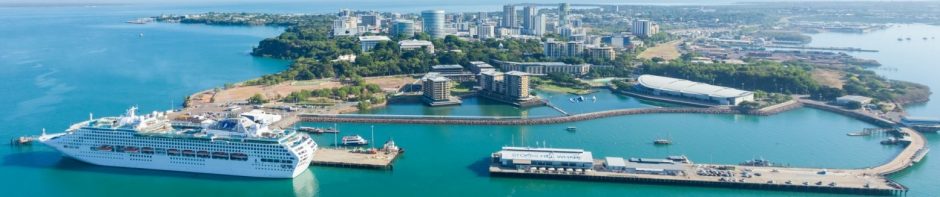
This article is a follow-up to my recent long piece titled Northern Territory development, debt and deficit - the long and winding road . Urban development ideas are invariably bedevilled by community dissension, much of it uninformed and anything but constructive. However, pa...
Continue reading →
I posted the piece over the fold some time ago (early January) but the fact that the federal Parliament's Joint Standing Committee on Electoral Matters is about to publish its report into the ongoing legal and constitutional debacle surrounding the Parliamentary disqualificati...
Continue reading →
In the engine room of nation states, ie the tax departments, the coming battle with platform providers is taking shape. Uber, airbnb, facebook, linkedin, ebay, jobseek, and a myriad of specialised platform providers facilitate micro-trades that are largely untaxed by the autho...
Continue reading →
Posted in Politics - national, Politics - international, IT and Internet, Economics and public policy, regulation, Political theory, Law, Information, Intellectual Monopoly Privileges, Innovation, Social, Intellectual Property, Public and Private Goods, Death and taxes, Employment
[caption id="attachment_31685" align="aligncenter" width="1000"] "Arrival" by Brett Whiteley, painted for the Bicentennial celebrations of the arrival of the First Fleet on 26 January 1788[/caption] We’re a weird mob, we Australians, even weirder than we were in 1957 when John...
Continue reading →
* cross-posted from Screen Hub . The #MeToo sexual harassment tsunami generated by the unmasking of American screen industry heavyweights Harvey Weinstein and Kevin Spacey has hit Australian shores with a vengeance. As an old Monty Python sketch observed: ‘Nobody expects the S...
Continue reading →
Australia has a backlog of issues that will need to be resolved by constitutional referendum sooner or later: Indigenous recognition (especially the Voice to Parliament); resolving the problems caused by archaic and unworkable parliamentary disqualification rules in section 44...
Continue reading →
The #MeToo flood of stories of women who feel abused by men – ranging from lurid stares to straightforward rape – seems like a disaster to me for the Democrats. Not because of the stories themselves, but because of how the progressive media and commentators have reacted to it....
Continue reading →
Posted in Life, Philosophy, Miscellaneous, Humour, Religion, IT and Internet, Gender, Media, Libertarian Musings, Health, Law, Information, bubble, Social, Cultural Critique, Bullshit
Let me indulge, purely for entertainment value, in some fan-speculation on what we will see on-screen after the Long Night is over and the final 6 episodes Of Game of Thrones are run in 2019. Let me first talk about the end-game aspects I think the books and the tv-series seem...
Continue reading →
Posted in Uncategorized, Uncategorised, Politics - international, Life, Philosophy, Print media, Environment, History, Miscellaneous, Humour, Education, Literature, Society, Religion, Films and TV, Sport-general, Theatre, Music, IT and Internet, Economics and public policy, Food, Terror, Science, Art and Architecture, regulation, Gender, Journalism, Media, Libertarian Musings, Geeky Musings, Health, Climate Change, Political theory, Metablogging, Law, Dance, Space, Review, Startup, Products, Travel, Immigration and refugees, Information, bubble, WOW! - Amazing, Social, Parenting, Race and indigenous, Ethics, Cultural Critique, Medical, Public and Private Goods, Death and taxes, Inequality, Personal, Social Policy, Democracy, Bullshit, Indigenous, Employment
Right-to-Carry Laws and Violent Crime: A Comprehensive Assessment Using Panel Data and a State-Level Synthetic Controls Analysis by John J. Donohue, Abhay Aneja, Kyle D. Weber - #23510 (LE) Abstract: The 2004 report of the National Research Council (NRC) on Firearms and Violen...
Continue reading →
The NT News’ front page on Saturday is a vintage piece of Murdoch tabloid journalism – aggressively funny but without any meaningful regard for fact or fairness. Of course portraying any politicians as “bastards” is bound to meet with general public approval, especially when M...
Continue reading →
Experienced Troppo readers will be aware that I fairly frequently post articles about topics relating to crime and punishment, especially crime statistics and patterns. Quite often those articles consist partly of impassioned diatribes against sensationalist tabloid crime “sho...
Continue reading →
Here is a link to a companion article to Treaty: Yeah, Nah, Maybe which I cross-posted here at Troppo from The Summit a week ago: What might a treaty look like? Another article published there a couple of days ago ( The hidden karma of Aboriginal affairs policy … ) is also rel...
Continue reading →
Cross-posted from The Summit . It was surprising (at least to me) that there wasn't more discussion at the NT Governance Summit surrounding the question of a possible treaty between Aboriginal Territorians and the Northern Territory Government. It seemed as if most of the curr...
Continue reading →
Sky News' Matt Cunningham is unimpressed by the actions of the Royal Commission into the Protection and Detention of Children in the Northern Territory, in restricting cross-examination of detainees, failing to proceed with hearings before Christmas, and obtaining a five month...
Continue reading →
I gave a talk at the Lowy Institute last Wednesday to which I initially gave a long-winded title "Intellectual Property- Economics, Diplomacy and Australia’s strategic interests" but managed to get more cut-through under the pressure of Twitters 140 character limit "DFAT goes...
Continue reading →
[caption id="attachment_29556" align="alignright" width="300"] Yingiya Mark Guyula and other newly elected Independent NT MLAs[/caption] In contrast to the almost continual chaos and dysfunction that marked the former unlamented Giles CLP government, the period of almost 2 mon...
Continue reading →
Section 18C of the Racial Discrimination Act (Cth) is a perennial favourite topic for right wing politicians, and conservative pundit Andrew Bolt has never stopped moaning about it ever since he ended up on the wrong side of a Federal Court decision Eatock v Bolt in 2011. But...
Continue reading →
In part 1, I looked at whether it made sense to have random individuals inserted into parliament, or to let policies be decided by juries full of randomly chosen individuals. Both were argued to be unworkable and likely to lead to more corruption, rather than less: policies th...
Continue reading →
Posted in Politics - national, Life, Philosophy, Print media, History, Miscellaneous, Education, Society, IT and Internet, Economics and public policy, regulation, Journalism, Libertarian Musings, Political theory, Law, Web and Government 2.0, Information, Ethics, Cultural Critique, Social Policy, Democracy
Emotional Judges and Unlucky Juveniles by Ozkan Eren, Naci Mocan - #22611 (CH HE LE LS) Abstract: Employing the universe of juvenile court decisions in a U.S. state between 1996 and 2012, we analyze the effects of emotional shocks associated with unexpected outcomes of footbal...
Continue reading →
It appears that the newly dominant Labor Party in the Northern Territory may be contemplating a legal challenge to the validity of the election of former CLP Chief Minister Terry Mills as an Independent MLA in his former seat of Blain. Labor will likely hold 18 of the 25 Legis...
Continue reading →
The following is a guest post by David Morris, Principal Lawyer of the Environmental Defenders Office (NT). The Northern Territory already carries a 1 billion dollar burden for legacy mines. These are mine sites where the company has walked away and left ongoing environmental...
Continue reading →
I am seeking a lawyer to run an Adverse Action case connected to the recent Fair Work Commission verdict that found systematic breaches of procedures and procedural fairness in the University of Queensland's actions against me following my research on racial attitudes in Brisb...
Continue reading →
Posted in Life, Economics and public policy, Science, Journalism, Media, Blegs, Law, Competitions, Race and indigenous, Ethics, Cultural Critique, Inequality, Personal, Social Policy
La Trobe University has now retreated from acting against academic Roz Ward (as I suggest below that it should). However I concluded it was still worth publishing this post, because it analyses important constitutional and legal issues that arise repeatedly in cases where an e...
Continue reading →
Chris Lloyd's comment on my previous Uber post prompt some further thoughts that I think merit a separate post. Chris said: “If you want to make a living off of Uber, you’re going to have to drive an insane number of hours.” I am surprised that Uber cannot offer cheaper fares...
Continue reading →
A story in this morning's media highlights the vulnerable position of pseudo self-employed "independent" contractors under Australian law: A Perth-based Uber driver is suing the Silicon Valley giant for terminating him without notice, leaving him with $80,000 worth of car loan...
Continue reading →
Political parties and institutions in Australia and the US are increasingly dominated by interest groups representing the few, leading to a large policy-induced increase in inequality in recent decades and a long raft of new policies favouring the few by giving them the tax re...
Continue reading →
Posted in Politics - national, Life, Philosophy, History, Society, Economics and public policy, regulation, Libertarian Musings, Geeky Musings, Political theory, Law, Information, bubble, Ethics, Cultural Critique, Public and Private Goods, Social Policy
[caption id="" align="alignleft" width="436"] I knew I could have responded and destroyed them – I could have said, “You’ve asked me a question that demonstrated you have not read our statute. How dare you question what I do?”[/caption] When I was on the Productivity Commissio...
Continue reading →
As you can see from the above image, the Daily Telegraph revived John Howard's History Wars the other day. Indeed they even disinterred Howard's favourite undead RWNJ historian Keith Windschuttle to lend an air of faux integrity to the whole unedifying clickbait exercise: Wind...
Continue reading →
It appears clear that the Governor-General (acting on the advice of the Prime Minister as per Westminster convention) can under Constitution section 5 prorogue the current Parliament and then appoint a new session to commence on 18 April. Presumably that is what occurred this...
Continue reading →
Some interesting constitutional questions seem to have arisen in the wake of Thursday/Friday's marathon Senate sitting which passed voting reforms for that House. Both Independent Senator Bob Day and veteran psephologist Malcolm Mackerras are threatening to launch High Court c...
Continue reading →
Queensland boy Julian Assange seems set to walk out of the Ecuadorian embassy soon, hoping that the announcement by the UN human rights panel on the arbitrariness of his detention will protect him from being arrested. The baseline scenario is that he walks out, is quickly arre...
Continue reading →
Posted in Politics - international, Life, History, Society, Journalism, Media, Libertarian Musings, Law, Information, Ethics, Cultural Critique
Here for my sins is the text of another letter I have just submitted to the local Northern Territory News: Dear Editor The statement in your editorial of 2 December 2015 that "neither of the major political parties is in a position we would consider as ready to govern beyond 2...
Continue reading →
I can only assume that op-ed pundit/pop historian Peter FitzSimons must have been wrapping his trademark red vanity hijab too tightly around his head and cutting off the blood supply to the brain. It is the only plausible explanation for this idiotic piece: At the very same ti...
Continue reading →
If next Tuesday's Labor "no confidence" motion against the minority Giles Country Liberal government succeeds in the Northern Territory Legislative Assembly, it will mark the first real test of the 4 year fixed term election arrangements that have become increasingly common in...
Continue reading →
This article was published at UNSW's Gilbert & Tobin Centre for Public Law site Australian Public Law. However they seem to be having some virus/accessibility issues so I am parking the article here for the moment. Statehood for the Northern Territory is on the national politi...
Continue reading →
Today marks the end of a 20 year saga that has indelibly scarred my life and those of my daughter Bec and former wife Jenny. I've written partial accounts of it before here at Troppo. I hope you'll forgive another one, it's catharsis. On 27 July 1995 Jenny's mother Rene Chambe...
Continue reading →
Could the High Court employ EU/UK/Canadian structured proportionality analysis recently embraced in McCloy v NSW to achieve a viable constitutional resolution of the dilemma posed by the need to protect secret national security information in anti-terrorism matters while at th...
Continue reading →
I examine the post-war economic development of two regions in southern Italy exposed to ma?a activity after the 1970s and apply synthetic control methods to estimate their economic performance in the absence of organised crime. The comparison of actual and counterfactual devel...
Continue reading →
Further to my post on Tuesday , the result in yesterday's High Court decision in NAAJA v NT [2015] HCA 41 will not have made either side completely happy. The Court upheld the validity of the NT government's "paperless arrest" law by a 6:1 majority i.e. the NT government won....
Continue reading →
Nicholas Gruen recently posted about the high cost of civil court proceedings in Australia (and for that matter throughout the common law world): A more promising kind of imperialism would be the application of simple economic principles to the way various social systems are m...
Continue reading →
This article explains the idea being explored in Victoria for a 'victims redress' scheme for victims of institutional child abuse. It's clearly yet another scheme for cutting the dysfunctional legal system largely out of the action of providing redress for abuse and handing it...
Continue reading →
The chorus of public concern over the constitutionality of the Abbott government’s citizenship-stripping proposal is growing. Malcolm Turnbull has again been emboldened to break ranks with his Prime Minister while denying he is doing any such thing. It will be ironically appro...
Continue reading →
Human rights lawyer Kerry Murphy has a very useful explanation of the weakness of judicial review as a safeguard against new laws foreshadowed by the Abbott government which would permit arbitrary ministerial stripping of Australians’ citizenship from those accused/suspected o...
Continue reading →
by Shamena Anwar, Patrick Bayer, Randi Hjalmarsson. Publication is available here . This paper uses data from the Gothenburg District Court in Sweden and a research design that exploits the random assignment of politically appointed jurors (termed naemndemaen) to make three co...
Continue reading →
Queensland's judicial system looks to be in quite a bit of strife at present. The former Newman LNP government's ill-advised appointment of an utterly unsuitable Supreme Court Chief Justice in Tim Carmody is continuing to cause serious problems. Mercifully, at least Carmody CJ...
Continue reading →
Delia Lawrie's announcement today that she was resigning as NT Labor Opposition Leader isn't really surprising in light of yesterday's news that Attorney-General John Elferink had referred her conduct over the Stella Maris controversy to both NT Police and the Director of Publ...
Continue reading →
( NB See my previous post on this important NT Supreme Court decision ). News that CLP Attorney-General John Elferink has referred the Delia Lawrie matter to the Director of Public Prosecutions is hardly a surprise, given adverse comments about her behaviour in a Supreme Court...
Continue reading →
[caption id="attachment_27165" align="alignright" width="300"] The old, heritage-listed Stella Maris Seamen's Mission in Darwin's CBD[/caption] Northern Territory Labor Opposition Leader Delia Lawrie is a fearsome political warrior, a divisive figure who seldom compromises or...
Continue reading →
In answer to my post earlier today about the data retention bill, frequent commenter Patrick Fitzgerald made a rather important point about the data retention zeitgeist: Embrace the panopticon Ken, buy yourself a webcam, attach it to your head and stream live 24×7. Plus for go...
Continue reading →
Data security and retention are very much in the news at the moment. Indeed the Abbott government’s data retention bill is currently being debated by the Senate and will inevitably be passed given that the Coalition did a deal with Labor whereby the latter will support it in r...
Continue reading →
Amidst all the depressing events of last week's failed leadership coup in the Northern Territory, there was at least one redeeming feature, at least for constitutional lawyers. Adam Giles' refusal to resign as Chief Minister, despite losing the confidence of the majority of hi...
Continue reading →
The legal misadventures of some colourful Darwin characters in A Territory Testamentary Tale at Parish McCulloch website.
Continue reading →
For some time I have been posting specifically legal articles/posts over at the bloggy part of the Parish McCulloch, Barristers & Solicitors website. I cross-post some of them here at Club Troppo. I have just posted quite a long article there which discusses yesterday's High C...
Continue reading →
[caption id="attachment_26524" align="alignright" width="140"] IPKats love a tweet[/caption] The lecture will be delivered (in Melbourne Sydney and Brisbane) by Jeremy Phillips. Jeremy (or more exactly a fictional and " notorious " cat: the IPKat) has three times, been named a...
Continue reading →
I don't have a particularly high opinion of Senator Nova Peris. I certainly don't think Prime Minister Julia Gillard should have effectively sacked long-standing and well regarded Senator Trish Crossin to get her into Parliament. Moreover, even if it was reasonable to aim at g...
Continue reading →
Monica Attard reports in The Hoopla on a very recent speech by Russian President Vladimir Putin in which he forcefully puts his country's side of the current conflict with Ukraine. I was especially struck by this observation: The US, [Putin] said, had instigated a “ coup d’eta...
Continue reading →
http://www.youtube.com/watch?v=GchWJasxVYY It looks as if prominent and obsessively determined euthanasia campaigner Dr Philip Nitschke may be in trouble again. He has already had his right to practise medicine suspended and is facing Medical Board disciplinary proceedings ari...
Continue reading →
Miles Kimball, for the uninitiated a sensible centrist commentator on economic policy is also an admirer of John Stuart Mill and has supported the case for decriminalising drugs . At the same time, since he thinks drugs - certainly recreational drugs or the new ones - are bad...
Continue reading →
Troppo author and frequent commenter John Walker asks: Ken The Bolt case was just one case- is there much information about how 18C has been applied, on a wider scale. Its pretty hard to judge whether there is a problem needing changes to the law , or not, on the basis of just...
Continue reading →
“This hand is not the color of yours. But if I pierce it, I shall feel pain. If you pierce your hand, you also feel pain. The blood that will flow from mine will be the same color as yours. I am a man.” Standing Bear to a Nebraska court, May 1879. More here . HT Three Quarks
Continue reading →
Posted in Life, History, Law
I don't pretend to understand the detail of the current situation between Russia and Ukraine, but it seems entirely reasonable to fear that this may well be the most significant threat to world peace since the Berlin Wall Crisis and Cuban Missile Crisis of the early 1960s. Eve...
Continue reading →
In my last post on Troppo I raised this question: ...who’s actually running [Australia’s] foreign policy these days? Is it Julie Bishop, as Minister for Foreign Affairs, is it Scott Morrison as Minister for Immigration or is it some other bugger? The answer, it turns out, is ‘...
Continue reading →
Some memories fade too slowly. I was reminded of one such memory by the TV advertisement being aired in the lead up to White Ribbon Day tomorrow (Monday 25 November). It was late morning on Friday, 20 September and I was at the local Magistrate’s Court on a court visit for the...
Continue reading →
Posted in Life, Society, Law
I learnt something interesting today, while I was writing up notes on legal history: Australia didn't formally achieve complete judicial and legislative independence from Old Blighty until 5.00am, Greenwich Mean Time on March 31 st 3 rd 1986. That's the precise time that the A...
Continue reading →
http://www.youtube.com/watch?v=QaqpoeVgr8U One of the numerous downsides of the rise of feminism is the demise of righteous masculine anger. For the record I'm strongly supportive of the great achievements of first and second wave feminism. But just as with other great changes...
Continue reading →
Simply bombing Damascus or Aleppo to assuage the conscience of the West that they 'did something' seems like the worst form of symbolic politics. It's not the only sensible thing Matthew Fitzpatrick had to say in an article at The Drum today. He also argued the appropriate for...
Continue reading →
To an even greater extent than previous election campaigns, this one seems to consist almost entirely of lies and grossly misleading mischaracterisations of opponents' policies and performance. Kevin Rudd's claim of a $70 billion Coalition black hole, his claim that Abbott has...
Continue reading →
In Part I of this article I outlined the major shortcomings of the Refugees Convention and traced the ways it was contributing to the current influx of boat-borne asylum seekers to Australia and the ongoing political controversy that has engendered. ((I am not suggesting that...
Continue reading →
Liberal Catholic priest and legal academic Father Frank Brennan thinks Australia's current asylum seeker policies, which are effectively bipartisan despite the electorally-driven sound and fury, exhibit a disturbing "race to the bottom" tendency. Sydney Morning Herald columnis...
Continue reading →
That power must reside elsewhere, with the best and brightest, with those who have surveyed the perils of the world and know what it takes to meet them. Those deep within the security apparatus, within the charmed circle, must therefore make the decision, on America's behalf,...
Continue reading →
Last week a prostitute was murdered on the streets of St Kilda in Melbourne, where I am currently living part of the time. Journalist Wendy Squires yesterday drew parallels between that crime and the horrific rape and murder of ABC employee Jill Meagher by serial rapist Adryan...
Continue reading →
Jon Altman is a Professor at the ANU Center for Aboriginal Economic Policy Research. His submission to the review is long and deeply grounded in long-term, first-hand knowledge of the indigenous art sector and remote area indigenous affairs more generally. It is a must read ....
Continue reading →
As Troppodillians may know, I don't follow the daily political chit chat unless I somehow get inveigled into it which I usually do at election time and also when debates seem to carry electric cultural significance about something that I have some particular interest in. I was...
Continue reading →
Interlude: Ruminations on 'the costs of speech', monkeys and Dexter In The 2013 PEN Free Voices lecture, reproduced on the ABC's Religion and Ethics web site , Waleed Aly makes the following observations on Freedom of Speech: … let us grind this out, beginning with a trite obs...
Continue reading →
The prisoner's dilemma is a simple and famous illustration of a problem that's very common. One of the areas in which it is common is the arms race where two parties competing with each other each invest to outdo the other. This is visible in lots of situations. In some areas...
Continue reading →
Jacqueline Maley has an article in today's Fairfax media musing about who might succeed Julia Gillard as Labor leader after an election loss later this year. It seems a tad premature in the circumstances, though only slightly more so than the subject of this post, which addres...
Continue reading →
Australia is one of the most prosperous and best-governed nations on earth. Our politicians, at least at national level, are mostly competent, honest and hard-working. And yet our mainstream media conveys an almost opposite impression, and the blogosphere and twitterverse proj...
Continue reading →
There has now been quite a bit of discussion about this week's dismissal of James Ashby's sexual harassment proceedings against former Speaker of the House of Representatives Peter Slipper for abuse of process (although nowhere near as much as the salacious coverage when Ashby...
Continue reading →
[caption id="attachment_21735" align="alignright" width="300"] You have to wonder why even a young-ish Julia Gillard didn't smell a rat given Bruce Wilson's eyes ...[/caption] The hive-mind that is the Canberra Press Gallery has apparently decided that PM Julia Gillard's activ...
Continue reading →
I wrote recently about the prevalence of personal smear tactics by both major parties in the current NT election campaign. It is one of the more repugnant aspects of modern politics, exemplified at federal level by the current Ashby v Slipper shenanigans. Last week the tactics...
Continue reading →
[caption id="attachment_21240" align="alignright" width="200"] Socrates Plato Paris Aristotle (it's all Greek to me - sorry couldn't help it)[/caption] Today's report on asylum seeker policy by Prime Minister Gillard's Expert Panel seems so far to have received a more positive...
Continue reading →
[caption id="attachment_21207" align="alignright" width="231"] Charmanjot Singh[/caption] Not before time, a NSW Legislative Council committee is considering the possible abolition of the provocation partial defence to murder. If the defence is successful it reduces murder to...
Continue reading →
"One punch" or "king hit" homicides have been in the news recently, especially since the killing of young Thomas Kelly in Kings Cross in Sydney a couple of weeks ago. In the Northern Territory dreadful events of that sort have been frequently discussed ever since the killing o...
Continue reading →
I've written before on the cancer of vox pop democracy , where all matters of policy must run the gauntlet of the vox pop test - which is to say that it must instantly appeal to a majority of shoppers at Fountain Gate who have a microphone shoved into their face and asked some...
Continue reading →
[caption id="attachment_20927" align="alignright" width="300"] Father Frank Flynn (left)[/caption] I was deeply disturbed by Monday's Four Corners program on child sexual abuse by Catholic clergy, not because it's any news as such but because very little seems to have changed...
Continue reading →
Erstwhile econoblogger and now federal Labor MP Andrew Leigh has been unjustly traduced by the dastardly Liberals and has complained about it on Twitter. Somewhat uncharitably some might think, I couldn't resist a gentle return poke: As media analyst Andrew Catsaras pointed ou...
Continue reading →
[caption id="attachment_20266" align="alignright" width="300" caption="Federal Attorney-General Nicola Roxon"] [/caption] Federal Attorney-General Nicola Roxon's media intervention into the Ashby v Slipper case provoked a Twitter discussion that's worth recording and then musi...
Continue reading →
The grand nephew of the Belanglo murderer has conducted a kind of ecstasy killing - which is to say he and another person dragged someone into the Belanglo forest and humiliated and terrified the victim before executing him with an axe, recording the incident and boasting abou...
Continue reading →
I could have made this a comment to yesterday's dodgy asylum seeker dilemma post, but I thnk it deserves a thread all on its own. One of the more interesting but largely unexamined aspects of statistics about asylum seekers in Australia is the stark disparity between success/a...
Continue reading →
Monday evening's Four Corners program about people smugglers gaining fraudulent entry to Australia didn't derail the Refugee Action Coalition Sydney's propaganda campaign even for a moment: The Four Corners’ people smuggling program has only added to the demonisation that surr...
Continue reading →
[caption id="attachment_19919" align="alignright" width="300" caption="Bob Collins"] [/caption] I had a bit of a cyber-chinwag on Twitter this morning with a couple of other legal academics about the rather obscure topic of the torts of maintenance and champerty. Melissa Casta...
Continue reading →
[caption id="attachment_19887" align="alignright" width="300" caption="Craig Thomson addresses Parliament (note Andrew Wilkie's expression)"] [/caption] More often than not these days, even day-to-day political "footie commentary" is purveyed with greater depth and perceptiven...
Continue reading →
There is quite a bit of current public controversy over refugees indefinitely held in immigration detention as a result of adverse ASIO security assessments which they cannot effectively challenge. Secret evidence provisions in ASIO regulations mean they can be denied all know...
Continue reading →
[caption id="attachment_19809" align="alignright" width="300" caption="Rose Ashton-Weir and her mum"] [/caption] The twitterverse erupted in response to this story in yesterday's papers about a student suing her former school Geelong Grammar for compensation, saying that it pr...
Continue reading →
Pseudonymous blogging lawyer Private Law Tutor confesses her occasional feelings of "shame" at being a lawyer: I’ve thought and talked and written about the deep discomfort that ebbs and flows in me with my work. Well, not my work as such, but the work that I do. The industry...
Continue reading →
After I posted a comment on Ken's recent post about swimmer Nick D'Arcy and his decision to file a debtor's petition in bankruptcy, he graciously invited me to contribute a post if I am insistent on disagreeing with his take. Ken argues that there is something that doesn't see...
Continue reading →
[caption id="attachment_19655" align="alignright" class="pull alignright" width="262" caption="Swimmer Simon Cowley"] [/caption] There's been lots of media coverage of the washup of swimmer Nick D'Arcy's bashing of fellow swimmer Simon Cowley in a bar some 4 years ago. Underst...
Continue reading →
http://www.youtube.com/watch?v=8e1xvyTdBZI Readers as geriatric as me will probably remember British comedian Benny Hill's famous spoof song Ernie (He drove the fastest milk cart in the west). It topped the UK Singles Chart in 1971, reaching the Christmas number one spot, and...
Continue reading →
Recovering journalist Mr Denmore succinctly summarises the response of the media (at least the Murdoch portion of it) to the Peter Slipper controversy: [T]he Tory regime changers of News Ltd could spin the Peter Slipper story into an imagined constitutional crisis and provide...
Continue reading →
[caption id="attachment_19526" align="alignright" width="300" caption="Magistrate Pat O'Shane"] [/caption] Cross-posted from CDU Law and Business Online With CDU Introduction to Public Law students due to study the topic judicial independence next week, it is an opportune time...
Continue reading →
Lawyers like their evidence to be nice and straightforward. Not to statistical. This is a real problem in some negligence cases. A surgeon might be a good surgeon, might have well below average adverse events, but if something screws up, doctrines like res ipsa loquitur - " th...
Continue reading →
[slideshare id=4858111&doc=ourfuturelibrary3-100728100555-phpapp02] Tim O'Reilly proposed the slogan "Government as a platform" for his Government 2.0 activities which he's heavily scaled back in favour of more lucrative opportunities. But there was always a problem. That prob...
Continue reading →
What a load of old sensationalist nonsense. I'm seriously starting to worry about Giz. If I want to search anonymously there is a thing called an anonymous tab. And I don't log into my Google account outside work because why would I? - My phone is logged in. That's how the fir...
Continue reading →
New article by me at CDU Law and Business Online (I've written on this topic before at Troppo but this one is aimed at law students and is therefore a bit more academic though hopefully still accessible and interesting for a general audience - feedback in that regard is invited).
Continue reading →
[caption id="attachment_18145" align="alignright" width="200" caption="Judge Michael Finnane"] [/caption] Justice Michael Finnane of the NSW District Court has long been one of my favourite legal characters. But then I'm not a criminal defence lawyer. If I was I'd almost certa...
Continue reading →
I paid a visit to Catallaxy earlier today after my Google reader informed me that Rafe Champion had awarded me and Jason Soon something called the HL Mencken Award . Although it's evidently not intended ironically, I was a bit taken aback given that my last interaction with Ra...
Continue reading →
The ethics of the second oldest profession - new post by me at CDU Law and Business Online .
Continue reading →
My post at CDU Law and Business Online .
Continue reading →
Update - Tweets placed in a more coherent context in In search of Qanilingus at CDU Law and Business Online . NB Australian Financial Review arguably has the best coverage and has no paywall for the weekend. downesy Stephen Downes by CDUlawschool Alan Joyce's secret ambition i...
Continue reading →
I didn't really expect that my recent posts about the somewhat indeterminate aims of the "Occupy ..." protest movement would result in a lively discussion thread about what I imagined was the entirely uncontroversial proposition that the limited liability corporation is by and...
Continue reading →
[caption id="attachment_17754" align="alignright" width="199" caption="Celebrity lawyer Chris Murphy"] [/caption] Twitter is a much more useful social media tool than I had imagined. I've been using it for several weeks now to produce the daily links to interesting legal stori...
Continue reading →
I muse at CDU Law and Business Online about the broader implications of Eatock v Bolt in light of last night's Austin Asche Oration in Law and Governance by Federal Court Chief Justice Pat Keane. Discussion is solicited, there rather than here by preference.
Continue reading →
From today's piece for Crikey: First a declaration of interest. I’ve known Allan Asher, thought only really to say 'hello' to, since the mid 1990s. I liked him and, at least from my limited vantage point think he was shaping up to be a good Commonwealth Ombudsman. He’d also in...
Continue reading →
New post by me at CDU Law and Business Online . An extract: Moreover, yesterday’s behaviour by Murdoch’s Brisbane Courier-Mail of publishing edited extracts of a Liberal-National “dirt” file on Queensland Labor MPs rather suggests that it is high time for media behaviour to be...
Continue reading →
At CDU Law Online - Colourful lawyers, police and the media (the Adam Houda wrongful arrest saga).
Continue reading →
With the noteworthy exception of the Fairfax investigative journalists especially Kate McClymont who continue to uncover new aspects of the story, Australia's predictably groupthink-oriented political media appear to have concluded (at least temporarily) that the fact NSW Poli...
Continue reading →
On any view yesterday's High Court decision holding the Malaysia Solution to be unlawful is a smashing blow to the Gillard government and an equally smashing win for asylum seekers and the people smugglers who capitalise on their desperation. In the slightly longer term it als...
Continue reading →
The ABC has made a documentary about David Hicks and screened it in an double episode of Australian Story. It's still on iView and I suggest you go check it out if you've not seen it. It went to some lengths to be 'balanced' but somehow the balance seems to me to tilt too far...
Continue reading →
Sinclair Davidson at Catallaxy has a post musing about whether carbon emissions trading permits would be regarded as property rights which would entitle the holder to compensation if abolished by a future federal government. The obvious context is the fact that Tony Abbott has...
Continue reading →
I've long been puzzled why Michelle Grattan is seen as an eminence grise of the Parliamentary Press Gallery. Unlike her corpulent male counterpart Laurie Oakes, who still occasionally produces major scoops and penetrating political analyses, I can't remember the last time Grat...
Continue reading →
If it had happened in the US it is inconceivable that a great deal of the emphasis would not have been on Justice for the Killer. "We'll hunt him down . . . " Well no hunting down required in this case but you get my drift. I can't recall what we said about it in Bali, but we'...
Continue reading →
Tonight's 7:30 Report featured a story on gay marriage (yes, I know the "report" bit has been deleted, presumably to signal the new post-Red Kezza regime). Strangely though, it didn't even mention in passing the fact that there is significant doubt as to whether the Commonweal...
Continue reading →
According to the ABC's Barrie Cassidy "even the most popular decisions taken by this government [are] essentially public relations disasters". It's one of those self-fulfilling media memes, resulting partly from Labor's deficient PR skills and partly from Tony Abbott's cynical...
Continue reading →
My Re-imagining Australian federalism post a couple of days ago resulted in an interesting discussion with Mike Pepperday. Mike argued that my suggestion for tweaking federal division of powers by having the States negotiate for a more adequate assured share of Commonwealth-ge...
Continue reading →
Big Tobacco has been bullying and blustering for some time about federal government plans to legislate for plain packaging of cigarettes (i.e. devoid of all branding, trademarks etc). They've threatened to challenge such legislation in the High Court as an acquisition of prope...
Continue reading →
The role of local government in Australia's federal constitutional system is one I've been thinking about while working up the People’s Northern Territory Constitutional Convention wiki. Constitutional recognition of local government was one of several seemingly innocuous and...
Continue reading →
I have distinctly ambivalent views about Statehood for the Northern Territory, as long-time readers will have noted. I even mused not so long ago about whether the existing grant of self-government should be revoked and other governance models explored instead. More recently I...
Continue reading →
At exactly the time late last year when the Wikileaks saga was occupying seemingly endless media column centimetres, important amendments were implemented to the Commonwealth's Freedom of Information regime. They flowed from a reform process implemented by Senator John Faulkne...
Continue reading →
I notice that a UK MP has just "outed" soccer player Ryan Giggs as the prominent sportsman who had a well-publicised extra-marital affair. His identity was (and remains) the subject of a "super-injunction" issued by the UK High Court and based on rights to privacy in the Human...
Continue reading →
Of all the right wing shock jocks, I find Andrew Bolt by far the best read. If you ignore the coat trailing and name calling - like calling 'Liberty Victoria' 'far left' (declaration of interest - I'm not sure if I'm a full paying member right now but I join it when asked) and...
Continue reading →
Freedom of expression in Australia is arguably freer than it has ever been, both legally and practically. Oppressive censorship of art and literature is largely a dim memory from the distant past (leaving aside infrequent moral panics like the Henson naked kiddie pic affair)....
Continue reading →
Having just watched Q&A on the republic (looking for my daughter who'd got herself into the audience!), I was intrigued by the post I've replicated below. I am the most luke warm republican around and have almost certainly put Chris Dillow's first argument below somewhere on T...
Continue reading →
Ken's last post seeks to crowdsource ideas for teaching law students some of their cognitive biases. I'd been contemplating on posting on something I'd read in Supercrunchers, and this gave me the perfect opportunity. Good questions Ken. I can’t answer them very satisfactorily...
Continue reading →
Author and Fairfax columnist John Birmingham posts a truly delightful splenetic prescription for appropriate responses to the odious Andrew Bolt, in the context of current racial vilification proceedings against him by a polyglot assortment of prominent Aboriginal activists: T...
Continue reading →
Murdered toddler Evelyn Greenup Last night's Four Corners on the Bowraville murders of three Aboriginal children some 20 years ago in northern New South Wales made rivetting TV. It painted a picture of a dysfunctional Aboriginal community riddled with alcohol and substance abu...
Continue reading →
I was contemplating writing a post about an ignorant, self-interested op-ed by billionaire mining heiress Gina Reinhardt until I asked myself the question: what's the point? It's a question whose answer increasingly constrains my blogging output after almost 9 years at the gam...
Continue reading →
Like Canadian UQ legal academic James Allan , former NSW Premier Bob Carr is a vehement long-term opponent of a bill or charter of rights for Australia (or any State). A post on Carr's blog only last week confirms that his attitude has not mellowed: More judge-made law a fine...
Continue reading →
Jon Faine - the Alan Jones of the Left? In a Coalition government the Immigration portfolio can be a career-enhancing opportunity. A Minister with a bleeding heart reputation like Philip Ruddock can prove that he's just as capable of ruthlessly opportunistic bastardry as anyon...
Continue reading →
Christopher Pearson writes in the Weekend Australian about a current situation involving Club Troppo and other prominent oz political blogs: GRAHAM Young is the founding editor of a well-regarded e-journal called On Line Opinion, and is a regular contributor to The Australian....
Continue reading →
In Part I of this post I explored factors that might account for the massive proliferation in the volume of legislation and subordinate regulation in Australia over the last 30 years or so. The post was prompted by an article by the IPA's Chris Berg. In the previous part I sug...
Continue reading →
Salma Hayek, who is apparently unrelated to Friedrich and may well be totally uninterested in either rule of law or regulatory reform ... That isn't gratuitous , is it? Chris Berg of the conservative thinktank Institute of Public Affairs takes aim at the proliferation of regul...
Continue reading →
Recent NT News discussion on the perennial topic of crime and punishment seems to have generated more heat than light. Chief Justice Trevor Riley wrote an excellent piece pointing out basic facts about the NT criminal justice system, not least the fact that NT judges and magis...
Continue reading →
From the conclusion of huge survey of courts around the world. We present an analysis of legal procedures triggered by re- solving two speci?c disputes—the eviction of a nonpaying tenant and the collection of a bounced check—in 109 countries. The data come from detailed descri...
Continue reading →
Here is an interesting Aust Parliamentary Library write up of the law of rape in Sweden (HT: Paul Barratt) with reference to the current legal peregrinations of one Julian Assange. My inexpert take on the law of rape is that the ordeal to which women were subjected before the...
Continue reading →
Not so long ago economist Paul Frijters mused about drug legalisation here at Troppo. It seems that Paul is an international trendsetter. Now economist elder statesman Gary Becker and the world's most prolific judge/legal academic Richard Posner are musing on the same topic at...
Continue reading →
Nicholas Gruen posted on the weekend about a South Australian defamation matter called Manock v Channel Seven Adelaide Pty Ltd which has been going for almost 7 years and still hasn't even reached trial. Nicholas quite rightly cited the case as a good example of the deplorable...
Continue reading →
Here is the first paragraph of a recent interlocutory judgement. Check out the dates. The judgement is dated 22nd November 2010. Six years and there's no sign of a trial. Not much more need be said really. I'd add that litigating defamation ought to be a relatively straightfor...
Continue reading →
There are some common elements between my recent post , which suggested a new asylum seeker assessment regime to take the place of universal mandatory detention during assessment, and proposals outlined last week by the Coalition Immigration spokesperson Scott Morrison in an a...
Continue reading →
An article by David Mallard at New Matilda reflects on some observations (canards?) by the Lord Chief Justice of England and Wales, Lord Judge (!!) about the allegedly malign influence of the Internet generally and social media in particular on the integrity of jury deliberati...
Continue reading →
Peter Timmins reviews the progress through the Senate (or rather lack of same) of a proposed limited "shield" law to protect the confidentiality of journalists' sources. As Peter noted, I gave evidence and made a submission to the Senate Legal and Constitutional Committee on t...
Continue reading →
I couldn't agree more with FOI expert Peter Timmins about the latest Wikileaks "disclosures". I have no idea whether Assange is a rapist or not, but he's certainly succeeded in setting the cause of public sector whistleblowing back by a decade or more. The documents so far dis...
Continue reading →
The publication of an edited version of my Troppo post about abolition of mandatory universal detention of asylum seekers at the ABC Unleashed site has certainly been an interesting experience. Fairly predictably it attracted the sort of polarised "howling into the darkness" c...
Continue reading →
It always seems to be two steps forward and then two back with Australia's asylum seeker policy. In the wake of the High Court's M61/M69 decision, DIAC has apparently begun offering all offshore asylum seeker s who have been refused refugee status a renewed assessment and pres...
Continue reading →
I was browsing in borders and came upon American Essays of the Century (ie the last one) edited by Joyce Carol Oates. Which was very tempting. I would have bought it if it wasn't $45 too. But I read the essay below - full as it is of what are now cliches of the civil rights mo...
Continue reading →
Apart from the issues canvassed in my previous post about yesterday's High Court judgment on the validity of aspects of the Commonwealth's offshore "boat people" asylum seeker processes, the sixty four million dollar question now is whether it will affect any attempt by the Gi...
Continue reading →
Like David Marr , I've been waiting for a while for the High Court's decision in the M61 and M69 case. The applicant's arguments challenge on various constitutional and statutory interpretation grounds the legal validity of the current asylum seeker processing regime, and in p...
Continue reading →
High profile constitutional law academic George Williams argues in today's SMH that the federal laws prohibiting self-governing Commonwealth territories (NT, ACT and Norfolk Island) from legalising voluntary euthanasia should be repealed. As a Territorian and public law academ...
Continue reading →
In a fairly desultory post , Helen 'Skepticlawyer' Dale presents the right wing de rigueur view that the United Nations is a waste of space dominated by corrupt third world regimes and should be abolished. Her pretext is the imminent establishment of a new UN agency for women'...
Continue reading →
Bob Durnan is an old ALP colleague who has worked in Indigenous communities in central Australia for the best part of 30 years. Like me, he has witnessed the tragic deterioration of living conditions in many if not most remote communities and town camps in the Northern Territo...
Continue reading →
The current impasse between large mining companies and the Gillard government over its proposed resource rent tax looks like yet another example of inept public relations if not worse: JULIA Gillard says it is "obvious common sense" that higher state mining royalties would not...
Continue reading →
This story on slashdot is an excellent example of how debauched intellectual property is as a means of stimulating research, development and innovation: As we discussed on Tuesday , Andre Geim won this year's Nobel prize in physics for graphene , but he never patented it. In a...
Continue reading →
Judging by this afternoon's headlines , PM Gillard may be taking seriously Independent Rob Oakeshott's bid to be appointed Speaker of the House of Representatives. I tend to agree with Dolly Downer's observation that Oakeshott just doesn't have the maturity or parliamentary ex...
Continue reading →
Alex Stewart has had his 15 minutes of fame, but may live to regret it. Earlier this week he posted a video on Youtube. It showed him smoking lawn-clipping cigarettes that were fashioned out of pages torn from the Bible and the Koran. He compared the taste “scientifically” and...
Continue reading →
In The New Republic this week Richard Just shines the spotlight on Barack Obama's hopelessly contradictory position on gay marriage. He compares it to Woodrow Wilson's pathetic attempts to dodge the issue of women's suffrage by claiming it was an issue for the states. The issu...
Continue reading →
Dear editor I wonder how many of the 84% of NT News respondents who think NT courts are too soft on criminals are aware of any of the following indisputable facts: NT judges and magistrates are tougher on crime than other states and territories. The NT has an imprisonment rate...
Continue reading →
Tony Abbott and Joe Hockey must be hoping that very few voters have any understanding of the basic principles of statutory interpretation. Any who did would instantly realise that the Coalition's promise to amend the Electoral Act to force unions to repay the Australian Electo...
Continue reading →
My observation that the US is a normal sane country harbouring a crazy one inside it (that for all my admiration for him, Abraham really should have let the South slough themselves off into oblivion without polluting the Great Republic) has served inadvertently as linkbait and...
Continue reading →
Sri Lankan asylum seekers in detention on Nauru in 2007 I was asked an interesting question this morning (well, interesting to me anyway) by a local media person about whether the seemingly imminent transfer of Christmas Island asylum seeker detainees to Darwin would mean an u...
Continue reading →
ABC political analyst Antony Green is predicting that Kevin Rudd will seek a double dissolution election in July-August. A double dissolution election can't be held after 10 August because Constitution s57 forbids a double dissolution within 6 months of the expiry of the House...
Continue reading →
Justin Madden - boofhead, retired AFL hero, Labor Minister and perhaps soon to be unwitting definer of the bounds of Westminster democracy A dispute has arisen in Victoria's Upper House of Parliament which seems to show some promise of throwing legal light on a dim aspect of A...
Continue reading →
In addition to Chris Lloyd's contribution below, several other bloggers have already published posts on last week's Federal Court decision ( Larrikin Music Publishing Pty Ltd v EMI Songs Australia Pty Limited ) about copyright breach in Men at Work's iconic pop anthem "Down Un...
Continue reading →
In 1934 an Aussie school teacher wrote a little ditty about Kookaburras that was enjoyed and sung by school kids for decades. She made pretty much no money out of it all, as it was, and is, still legal for kids to sing a song at school without paying the composer, thank the lo...
Continue reading →
Posted in Music, Media, Law
It now looks as if Malcolm Turnbull is gone for all money as federal Liberal leader (a shame from my viewpoint). Meanwhile, Rudd Labor is ramping up the rhetoric hinting at a double dissolution election. But is that really likely? There are a couple of major factors suggesting...
Continue reading →
Cross posted from www.gov2.net.au At a roundtable in Sydney, Miriam Lyons of the Centre for Policy Development (CPD) mentioned the idea of inquiries 2.0. As I said to her at the roundtable, Ive been giving a fair bit of thought to that question myself. Having spent some time o...
Continue reading →
Yes, it's true folks. But there is a catch. You have to be between 18-28. And you have to be 'progressive'. Me? I cover the field , so I can do progressive, but I can't do 28 anymore. So I'm out. But you - you may be in. So get those skates on and get over to the Australian Fa...
Continue reading →
Cross Posted from Gov2.net.au . Its a truism that the public sector is risk averse and that thats one of the things holding up the adoption of Web 2.0 approaches and indeed quite a few Web 1.0 approaches. I dont think this is inaccurate, but its also too general a statement to...
Continue reading →
[caption id="" align="alignright" width="399" caption="Dr Gruen insisting that he only appear within photo borders which theme with his tie "] [/caption] Over a month ago I gave a paper at a conference organised by Brian Fitzgerald which I reproduced earlier on Troppo here . T...
Continue reading →
About 10 days ago all State and Territory Attorneys-General agreed to enact uniform anti-bikie gang laws . The new uniform national regime will be modelled on the Victorian regime which is broader than three very similar laws recently enacted in South Australia and New South W...
Continue reading →
Sydney Morning Herald 29 May 2009 An abattoir worker has been jailed for eight years for raping his 14-year-old stepdaughter and then blaming his crime on her wearing short skirts around the house. The man, who cannot be named as it would identify his young victim, tried to se...
Continue reading →
Reclaiming Americas Soul, by Paul Krugman, Commentary, NY Times : Nothing will be gained by spending our time and energy laying blame for the past. So declared President Obama, after his commendable decision to release the legal memos that his predecessor used to justify tortu...
Continue reading →
It's quite tricky to teach undergraduate law students about the Whitlam Dismissal. You have to cover it because it's the only example of exercise of vice-regal reserve powers of dismissal of an elected government since federation (at least at federal level; there's also Sir Ph...
Continue reading →
The High Court this morning rejected an appeal by former radio star John Laws' employer Radio 2UE against a defamation verdict for comments he made about fellow shockjock Ray Chesterton. The SMH seems to summarise the judgment accurately as far as I can see from a quick scan r...
Continue reading →
The Thomas v Mowbray thread has taken an unexpected but fascinating turn, at least from my viewpoint as a public lawyer. It's kickstarted a productive debate about the form of an Australian bill of rights. As this is only tangentially related to the topic of the post, I've dec...
Continue reading →
Occasional visitor "Edward Carson" wrote a somewhat cynical comment on my previous post about asylum seekers : Does this mean that if they fill out the appropriate forms in duplicate, we are then obliged to accept them all into our country? Although I strongly suspect "Edward"...
Continue reading →
"Jihad" Jack Thomas I've been meaning for ages to write about the High Court's 2007 decision in Thomas v Mowbray , in fact ever since it was handed down. Complex constitutional decisions are really difficult to write about in a way that's accessible and interesting to a genera...
Continue reading →
Yesterday's "boat people" explosion near Ashmore Reef west of Darwin, in which 3 people were apparently killed outright and many more seriously injured, has eerie if obvious parallels with the "children overboard" saga of 2001 which helped John Howard to his third successive e...
Continue reading →
President Iloilo [ Cross-posted from the blog I run for CDU public law students ] There doesn't seem to be anything especially remarkable about the current (2009) Fiji coup whereby Fiji's ageing and ailing President Josefa Iloilo sacked the Fiji Court of Appeal which only last...
Continue reading →
Not so long ago Nicholas Gruen published a post lamenting the extraordinary cost and complexity of civil litigation in Australia and common law countries generally. He ascribed it partly to the adversarial system and canvassed the possible advantages of a more European-style i...
Continue reading →
(*This was posted elsewhere for my CDU Intro to Public Law students, so it might be a bit dry and technical for some. Nevertheless others might find it worth reading) The Rudd government's proposed reforms to the Freedom of Information Act 1982 (Cth) ("FOI Act" ), sponsored by...
Continue reading →
Fiji's president takes charge (SMH) Fiji is in a state of political flux after President President Ratu Josefa Iloilo announced he had repealed the country's constitution, appointed himself head of state and set a 2014 election deadline. He said on Friday he had also sacked al...
Continue reading →
Internet company to be sold by 2022 (SMH) THE Rudd Government will next month try to lock Parliament in to approving the sale of its new broadband company by 2022 in a bid to avoid a repeat of the bitter Senate debates over the privatisation of Telstra. In an interview with th...
Continue reading →
Here's a piece of blatant and unashamed recycling. I run a discussion board for my Intro to Public Law students where they're welcome to post and discuss news items with a public law angle. Over the weekend one of them posted a link to the current stoush between Defence Minist...
Continue reading →
Regarding last night's Four Corners about Marcus Einfeld's disgrace , there are exactly two things to be said. The first is that it's a complete mystery why he approached the interview, made with Sarah Ferguson just before sentencing, in the way that he did. It would have been...
Continue reading →
A couple of weeks ago recently retired High Court Justice Michael McHugh entered the public debate on whether Australia should have a legislated bill of rights. The debate (such as it is) was one of the "outcomes" of the Rudd government's 2020 Summit, and more recently led to...
Continue reading →
All subjects are linked to crocodiles. Just ask the NT News ( via Flickr ) High Court challenge jeopardises $900 bonus - Sydney Morning Herald (19 March) - THE High Court has agreed to hear a challenge to the legality of the Federal Government's proposed $900 tax bonus to 8.7...
Continue reading →
From Sydney Morning Herald (I'm sure they won't mind) The strict political neutrality of Australia's Governor-General is a crucially important democratic principle, but one whose mention usually elicits a combination of boredom and baffled incomprehension from most people. It'...
Continue reading →
News that South Australian Premier Mike Rann is contemplating a High Court challenge to the federal Murray-Darling water deal is good news for constitutional lawyers, because it would result in the resolution of a question raised before Federation but never litigated. Such a c...
Continue reading →
HT: 3Quarks . FORMER GITMO GUARD TELLS ALL Scott Horton in Harper's : Army Private Brandon Neely served as a prison guard at Guantánamo in the first years the facility was in operation. With the Bush Administration, and thus the threat of retaliation against him, now gone, Nee...
Continue reading →
Free riding is the engine of productivity growth. People see something and copy it. Clothes, business methods, recipes. But there are also things that deliberately prevent free riding. Copyright, Patents that kind of thing. Unfortunately we've pursued the metaphor of property...
Continue reading →
A nice essay linked to from Crooked Timber. Here it is as edited on CT - but for the original go here . Via Cosma , Canadian historian Rob MacDougall on a characteristic American tendency to see radical social change as the inevitable expression of values expressed and promise...
Continue reading →
A few weeks ago, on the 30th of Sept to be precise, I gave a speech to 'science leaders' in CSIRO. Science leaders are early mid career scientists from around the world whom CSIRO have recruited. As the speech explains, Jim Peacock, the Chief Scientist whom I met when on the I...
Continue reading →
In light of the massive interventionism that is being practiced by governments to handle the financial crisis, a warning needs to be repeated regarding two very different kinds of government action. The warning can be found in Chapter 17 of The Open Society and its Enemies , s...
Continue reading →
Gary Linnell in today's Daily Telegraph asserts that debate about capital punishment is taboo in Australia, a claim which is rather negated by the fact that his own death penalty advocacy is carried not only in the Tele but on Australia's mostly widely read online news site an...
Continue reading →
From a Fin Review column on 22nd July. The February meeting of the Shellharbour council, on the NSW south coast, was to start at 7.15pm. But the majority of councillors, Labor Party members, refused to assemble until an undesirable left the public gallery. He seemed harmless,...
Continue reading →
Thanks to Ken Parish for helpful comments and corrections. The high price of justice Nazi Sex Romp! Now Ive got your attention Im going to talk about legal procedure. After the lecture well return to the sex romp. Attorney General Robert McClelland has joined the chorus of con...
Continue reading →
The short answer is that we'd better be able to because as various people of high authority have commented, the current system is unsustainable. Here's story as to why. A costs decision handed down in the NSW Supreme Court in February showed National Australia Bank spent $75 m...
Continue reading →
Here is today's column for the Financial Review. Patently there's a problem As Mark Twain said, It ain't what you don't know that gets you into trouble. Its what you know for sure that just aint so. Our biggest mistakes often come when we're most untroubled by our logic even w...
Continue reading →
Brian Fitzgerald drew my attention to this sad valedictory post at The Patry Copyright Blog . 2. The Current State of Copyright Law is too depressing This leads me to my final reason for closing the blog which is independent of the first reason: my fear that the blog was becom...
Continue reading →
I realise this is kind of missing the main news story in the recent court victory of Max Mosley - son of Oswald who was the leader of the British Union of Fascists. (That's not to say that Max should automatically be tarred with the same brush, but he does seem to dip into tha...
Continue reading →
Help! My insanity level is increasing. I've just written another letter to the editor of the Northern Territory News : Its understandable when political flacks and criminal lawyer advocates exaggerate the extent of crime in the Territory. Its both disappointing and puzzling wh...
Continue reading →
I couldn't believe my ears today when I heard The Queensland Police Minister, Judy Spence interviewed about the paedophile who is living in the semi-rural town of Carbrook on Breakfast on ABC Radio National. As you no doubt know, there's a baying mob there right now. I might b...
Continue reading →
..Looks like a quiet night. I need to get something off my chest. I have just received a notice from the Juries Commission in Victoria that I am wanted for jury service. It's one of the letters a busy person dreads. You cannot get out of it, even by paying a fine. And they are...
Continue reading →
Why is it do you think that jurors playing Sudoku during a criminal trial amounts to a miscarriage of justice sufficient to abort a trial but it's perfectly OK for a judge to fall asleep and snore?
Continue reading →
I've long regarded writing a letter to the editor of a newspaper as a rather sad and futile exercise. Far better to post on your own blog, where at least you're only inflicting your opinions on genuinely consenting adults with similar obsessions. However, I couldn't resist sen...
Continue reading →
It's a little surprising that, outside the RWDB blogs, virtually no attention has so far been paid to the current trial of Canadian right wing pundit Mark Steyn on (effectively) religious vilification proceedings by the British Columbia Human Rights Commission. Admittedly it's...
Continue reading →
I've been puzzling about international humanitarian interventions lately, in part because my daughter Bec is in the middle of a uni assignment on the subject, but mostly because as I write this Robert Mugabe continues to terrorise and impoverish his own people in Zimbabwe whil...
Continue reading →
I was more than a little surprised when what I thought was a reasonably uncontroversial item in yesterday's Missing Link elicited a heated response from frequent Troppo commenter and erudite legal eagle Patrick Fitzgerald. The item concerned arch-conservative US Supreme Court...
Continue reading →
Previous tatooed breasts scales of justice deep-sixed to avoid bad taste distraction from a post intended to provoke serious discussion ... John Greenfield is a conservative blog commenter who occasionally fulfils a useful function, rather like a canary in a coal mine. He can...
Continue reading →
Writing a post about a Janet Albrechtsen column is almost certainly an advanced symptom of insanity, ranking just behind hairy palms and checking to see if you have them. Nevertheless, her effort in yesterday's Oz about the alleged perils of an Australian charter of rights mer...
Continue reading →
A whilc back 'principle based' regulation was all the rage. Outcomes based regulation is another catch cry. In an interesting paper Chris Berg of the IPA argues that the 'mega regulators' of Australia - the ACCC, APRA and ASIC - have now carved out for themselves such discreti...
Continue reading →
Today's Herald reports that the NSW Treasury has done its own estimates of the costs of achieving various targets for carbon emissions. The NSW Treasurer, Michael Costa, said it would cost $430 billion to reduce greenhouse gas emissions by up to 80 per cent as outlined by Ross...
Continue reading →
A truly lovely space non? As I've been thinking about all the exigencies of making 'continuous improvement' a feature of our regulatory culture and institutions, I read an intriguing and, in such circumstances inspiring essay by Glyn Davis (pdf), cleverly titled "A city of two...
Continue reading →
In all the relevant senses of the word. I've not said anything about the Summit here mainly because I don't think there's much to say about it until we see more of what it does and doesn't achieve. And even if it isn't a great success I can't see how it will be a big failure....
Continue reading →
I was delighted to hear Radio Eye's bio on the late and thoroughly great Campbell McComas . I first heard him in his prototypical role as the Cambridge Criminal Lawyer Granville Williams. A bootleg tape of a marvellous lecture he gave impersonating this fictitious person - the...
Continue reading →
Quite a while ago, Kevin Cox approached me with an idea he had called 'energy rewards'. Kevin may wish to chime in on comments with an appropriate link to the best explanation of the idea. In any event it's a method of generating purpose specific permits or certificates which...
Continue reading →
Amazing what creatures of habit we are, and how powerful curiosity is. I was on Brad DeLong's Feedblitz email drip for a year or so and typically checked out the daily email's contents, and then followed up if there were items of interest. I took myself off it and didn't repla...
Continue reading →
Read this piece and cry. Steketee
Continue reading →
Prompted by the exchange between Gruen and Gittins on NSW privatisation, I asked myself a much broader and pertinent question: what should be the proper role of government in the allocation of capital in Australia? At the two ideological extremes, the answer is simple. The int...
Continue reading →
Thanks to Ken Parish for sending me a link to this (pdf) article on Gordon Tullock's critique of common law. As I read the article I was respectively irritated, pleased and then irritated again. But it's a good and interesting article. My irritation comes from the Procrustean...
Continue reading →
So the cash rate has gone up to 7.25%, and the banks will probably raise their lending rates by more than 0.25%. We all understand the official reasons why the RBA has done this. The inflation rate is too high and shows no immediate signs of falling. It's too high because tota...
Continue reading →
There was an extraordinary article in the Australian yesterday ( here ) by Vaclav Klaus. In his article, which is a condensation of a speech for a conference of climate sceptics, Vaclav makes mince meat out of the climate alarmists and accuses them of having bad intentions. He...
Continue reading →
Picking up on Nicholas Gruens posting of 4 March on Bowles and Gintis essay ("Is equality passe?"), I notice that B and G point to opinion survey evidence that Americans, while hating welfare, support many redistribution measures which are consistent with reciprocity norms, in...
Continue reading →
The SMH which published an op ed of mine has just sent me their editorial ethics policy. I have no trouble agreeing to it. But I have some concerns about their journalists. This isn't a criticism of them. And it's not a criticism of the policy - but there is a bit of a disconn...
Continue reading →
In recent months, in newspaper articles and letters and in Club Troppo positings, I have been hammering the theme that (a) the short term inflation risk is largely cost push and only marginally driven by excess demand (as reflected in wages and profit margins) (b) the RBA and...
Continue reading →
I've heard it attributed - perhaps apocryphally - to John Maynard Keynes the line that a legal training is a form of brain damage. I couldn't find it on google when I last looked, so I don't know if he said it. But is it true? Well I have a legal training - of sorts - and duri...
Continue reading →
[caption id="attachment_30542" align="alignleft" width="654"] Firbank College from the air (You could probably tell that it was "from the air" - but this is Club Troppo boldly going where no stakeholders' expectations have every been.)[/caption] I spent the day - well the firs...
Continue reading →
I've just been asked by the Department of PM&C to nominate someone to go to the 202o Summit. Who should I nominate - and why? This post will be moderated strictly. Suggestions should be serious and I hope you'll provide good reasons. Of course there will be people who want to...
Continue reading →
Posted in Politics - national, Politics - international, Life, Philosophy, Environment, History, Education, Society, Religion, Economics and public policy, Science, Gender, Journalism, Health, Climate Change, Political theory, Law
Seamus C's post proposing popular elections for Australian of the Year raises the intriguing possibility of a similar mechanism for appointment of a rather more important official Australian role, namely that of Governor-General. There was speculation only a week or so ago tha...
Continue reading →
I heard Debra Dickerson for the first time on a summer replay of a Counterpoint program I'd not heard during the year. She wrote a book published in 2004 or thereabouts entitled The end of blackness. I wondered if Noel Pearson might have forgotten to acknowledge her in an essa...
Continue reading →
I've just received an email from Liberty Victoria. It says this: In 1999 the Howard Government amended the Migration Act to permit the Minister for Immigration to deport non-citizens on character grounds irrespective of how long they had lived in Australia. Previously, permane...
Continue reading →
From today's Crikey! by Greg Barnes. When the Howard government and its allies in the ALP fell over each other in their mad scramble to pass draconian anti-terror laws, there were some wise heads warning that such legislation would open the door to abuse by law enforcement and...
Continue reading →
Hopefully Troppodillians will forgive me for tackling another Pearson piece only two weeks after my last effort. I'll try not to make a habit of it, I promise. With your indulgence, then, let's proceed. Is it relativism to hold our liberal democratic traditions to a higher sta...
Continue reading →
A sense of gloom settled in as I ploughed through The Weekend Australian yesterday. It felt like February 2003 again, only worse. Then, an optimist could at least excuse the thumping of the drums of war as the triumph of hope over experience. In the light of the last four year...
Continue reading →
Well, the speculation in my previous post was essentially spot-on. The High Court has ruled in Roach v Electoral Commissioner (reasons for decision published late yesterday) that Australians have a constitutionally guaranteed right to vote in federal elections, flowing from se...
Continue reading →
(This is the third and last in a series of posts exploring Australian federalism (the first part is here and the second is here ). I've been struck by the seeming popular lack of interest in Australian federalism, not only judging by the lack of public outrage at John Howard's...
Continue reading →
I argued in a prior post that a directly elected and separate executive is a more democratic form of governance. Not content with that, over at SSR we developed a gubernatorial constitution for NSW. This constitution is nothing new. It contains concepts and existing constituti...
Continue reading →
This diagram is in a presentation by Tony Blair about Britain. So who knows if the sources are chosen conveniently. But, providing the stats aren't shonky in some way it makes a telling point. Similar points could be made about job security and no doubt other social phenomena...
Continue reading →
I have been observing with interest the latest news that ASIC has commenced action against the directors of James Hardie Industries for breaches of the Corporations Act between 2001 and 2003 . Now you may recall that in a blaze of publicity over asbestos related illnesses and...
Continue reading →
Cesare Beccaria 's reasoned argument against torture in 1764: A cruelty consecrated among most nations by custom is the torture of the accused during his trial, on the pretext of compelling him to confess his crime, of clearing up contradictions in his statements, of discoveri...
Continue reading →
Needing little encouragement from Justices Kirby and Callinan, the Henny Penny brigade are off and running over today's Work Choices decision by the High Court. Tim Dunlop titles his post "The States are Dead" over at Rupie's place. Meanwhile, the hard core lefties over at Lav...
Continue reading →
Colin Wicking beat me to the punch with a comment on this morning's High Court decision in the WorkChoices Case . My only excuse is that my sort of commentary forces me to read the actual judgments rather than just the headline outcome. Nevertheless, although the judgments are...
Continue reading →
Extreme anger is as good a reason as any to come out of blogging retirement temporarily. The ABC's Andrew Denton has demanded that Channel Nein apologise to Joanne Lees for publishing a poll on yesterday's Today program asking viewers if they felt Ms Lees was innocent of Peter...
Continue reading →
Peter Faris today expands his defence of the anti-terrorism laws under which Jack Thomas has been subjected to a control order. He frames this analysis as a reasoned legal one: Two issues arise. First, is the control-order legislation good and appropriate legislation against t...
Continue reading →
Self-described "libertarians" all seem to have a blind spot about gun laws. Some of them are radically dishonest about their quasi-religious pro-gun obsessions. American "academic" John Lott, whose multiple misdeeds are chronicled obsessively by ozplogger Tim Lambert (to such...
Continue reading →
I've been fairly scathing in the past about some of the more egregious published opinions of Deakin University's blogging legal academic Mirko Bagaric . Here in relation to his advocacy of the legalisation of torture; and here on his proposal to re-introduce the notion of faul...
Continue reading →
Yesterday's Crikey mail included a comment by Michael Pascoe about the seemingly endless stories about corporate shonks being able to retain profits from their dodgy dealings. He writes: One should always be wary of suggesting another legal penalty to Laura Norder-crazed polit...
Continue reading →
On several occasions during my years in private legal practice, I observed the phenomenon of a company liquidator and his solicitors whose main goal appeared to be transferring the company's assets into their respective office accounts as quickly as possible. Of course, it's o...
Continue reading →
I posted about the Howard government's new(ish) sedition laws last year when they were going through Parliament, and expressed the view that they might well breach the implied cosntitutional freedom of political speech. Constitutional law academic George Williams expresses a s...
Continue reading →
Portrait of Justice Michael Kirby in this year's Archibald Prize - you can see why it didn't win I have to confess that I'm one of those sad souls who's actually been reading the daily transcripts of the current High Court argument in the Workplace Relations Challenge (now int...
Continue reading →
Today's column from the Financial Review. About twenty years ago, a boatload of Indonesians arrived on Australia's coastline and claimed refuge. That request threatened relations with Indonesia and alarmed federal ministers. Cabinet secretly decided - without any interviews -...
Continue reading →
Massachusetts Board of Pharmacy orders Wal-Mart to stock morning after pills Last year the Washington Post reported that "pharmacists across the country are refusing to fill prescriptions for birth control and morning-after pills, saying that dispensing the medications violate...
Continue reading →
Deakin Law School's self-promoting funster double-act James McConvill and Mirko Bagaric is at it again. Following up on his previous effort advocating the legalising of torture, Bagaric has posted an article at Online Opinion in which he advocates a reversion to the pre-1975 c...
Continue reading →
I wonder if I'm just being naive in imagining that there was once a time when newspaper editors, at least on the quality broadsheets, maintained a clear distinction between news and opinion, and attempted as far as possible to report the news in a reasonably straight, unbiased...
Continue reading →
Suppose you're at a rollicking pub. An obviously very-drunk man is staggering about, brandishing his car-keys. From what you can understand from his slurred speech, his intention is to shortly drive home. Do you: (a) try to gently talk him out of it? (even at the risk of fruit...
Continue reading →
The Howard Anti-Terrorism Bill (No. 2) 2005 (no. 1 being the one rushed through both Houses yesterday with bipartisan support) is a considerable improvement on the original draft leaked by ACT Chief Minister John Stanhope. But it still has major problems in my view. Sedition p...
Continue reading →
Richard Ackland has a powerful and angry article in this morning's SMH about the Howard government's anti-terrorism bill (a topic about which I've blogged here and here ): The design of the legislation is to conscript the federal judiciary into sprinkling holy water over asses...
Continue reading →
I must be going through a particularly grumpy phase of middle age at the moment. It's not often these days that I find myself so peeved by a TV current affairs story that I can't resist resorting to a cathartic blog post. But that was certainly the effect of an item about the...
Continue reading →
The aptly named Chas Savage contributed an opinion piece in The Age the other day about the sedition provisions of the Howard government's proposed new anti-terrorism laws . Savage's article is well written and makes some good points: I openly urge disaffection with the consti...
Continue reading →
Peter Kemp has an interesting post at Mark Bahnisch's place , in which he argues that the "preventative detention orders" to be created under the Howard government's proposed new Anti-Terrorism Bill 2005 may be unconstitutional, in that the provisions repose non-judicial funct...
Continue reading →
In case anyone finds this observation reassuring, less people have died in the London bombing than the US authorities incinerated at Waco . I support joint activities with our ally when it is proper or expedient to do so (and especially when it is both proper and expedient). S...
Continue reading →
Latest counting after Saturday's NT election suggests the CLP will most likely end up with just 4 seats, Labor 19 and Independents 2. It's a stunning Labor whitewash, equal to the largest victory the CLP achieved in its long years of dominance, back in 1983. Despite my modest...
Continue reading →
When I went to law school, my criminology lecturer Gordon Hawkins taught us that research clearly showed that the death penalty had no measurable deterrent effect on murder/crime rates. But I recall thinking at the time that the evidence he cited didn't sound all that compelli...
Continue reading →
A number of readers have emailed urging me to say something about the bloody Schapelle Corby case. God knows why they'd want to read yet another pundit whittering on about it; surely Schapelle has already consumed enough column centimetres for even the most hardened legal soap...
Continue reading →
What is federal Transport Minister John Anderson up to with his planned federal takeover of Australia's ports? And what does the ACCC know about regulating ports, let alone operating them? It's the national competition and consumer protection watchdog, for God's sake. I starte...
Continue reading →
Tim Dunlop muses about the need for an Australian Bill of Rights, in light of some comments by the head of the federal Attorney-General's Department, Robert Cornall, to the effect that perhaps some individual rights might need to take second place to the collective/community r...
Continue reading →
"There can be no tolerance toward democrats and communists in a libertarian social order. They will have to be physically separated and removed from society. Likewise, in a covenant founded for the purpose of protecting family and kin, there can be no tolerance toward those ha...
Continue reading →
The Weekend Australian's editorial described the non-custodial sentence handed out to hit-and-run-killer Adelaide criminal lawyer and former police prosecutor Eugene McGee as a "travesty of justice". Certainly a $3,100.00 fine and licence disqualification appears grossly inade...
Continue reading →
The thing that has puzzled me about the seemingly endless Schapelle Corby drug case is why anyone would bother to smuggle gunja from Australia to Bali, given that I assumed prices are much higher in the former than the latter. But Miranda Devine , of all people, may have provi...
Continue reading →
AustLII (the Australasian Legal Information Institute) has just released a new facility called the Point-in-time Legislation Project . It allows users instantly to view legislation at any given historical date. You simply select the desired date in relation to any law and it i...
Continue reading →
George Williams has emailed me and advised that his detailed opinion on the constitutionality of a Tasmanian Greens Bill aimed at allowing same-sex marriage is available on the Tasmanian Greens website . Melbourne University public law academic Simon Evans (whose blog I've jus...
Continue reading →
A Tasmanian Greens bill to legalise gay marriage is attracting significant attention in the national media. UNSW constitutional lawyer George Williams is being touted by supporters of the bill as advising that it may well survive constitutional challenge (somewhat ironically)...
Continue reading →
Sometimes events happen in our lives that are so horrible that they scar us permanently. Educationalist Kevin Donnelly , a sometime guest blogger here at Troppo, and his family have had just such an experience. Kevin's son James was killed in a hit-and-run road accident some 3...
Continue reading →
The current relatively conservative makeup of the High Court has a range of manifestations, not just in more newsworthy decisions like indefinite detention of asylum seekers or preservation of barristers' unconscionable immunity from suit . One may also argue with some force t...
Continue reading →
I think I must reluctantly agree with Christopher Sheil (and I conceded in my previous post anyway) that any scheme to levy a state-based income tax would in all probability be a political suicide note for any state government introducing it. However, as Chris also observed, t...
Continue reading →
In a post a week or so ago I lamented the seemingly imminent terminal dismemberment of Australian federalism at the hands of an arrogant fourth term Howard government with apparently little or no understanding or respect for the fundamental principles of liberal democratic con...
Continue reading →
On North Terrace here in Adelaide there is a fine building known as Parliament House. This ornate structure is home to the most laughable legislature known to man. There are plenty worse around- Zimbabwe's springs to mind just at the moment, but for comic ineptitude, it is har...
Continue reading →
The future of Australian federalism has been a much discussed topic recently among the commentariat of both mainstream and blogosphere. It's hardly surprising given John Howard's extraordinarily hubristic statement that Australia would be better off without state governments....
Continue reading →
Today's ruling by the trial judge in the Michael Jackson child sexual abuse case, allowing the prosecution to lead evidence of other alleged incidents of abuse of young boys by Jackson, makes a conviction significantly more likely: Legal analysts say the admission of such expl...
Continue reading →
One of Professor Bunyip's blogging obsessions is excessively intrusive traffic policing in his home State of Victoria. It's understandable if Bracks' henchmen are anything like NSW, with whose practices I'm much more familiar through annual holiday visits. Speed cameras prolif...
Continue reading →
Here is a discussion board post I've prepared for my first year Introduction to Public Law students here at CDU, to focus their minds on fundamental constitutional concepts in a topical, real world context. I thought some Troppo readers might also be interested. Richard Acklan...
Continue reading →
One of the more disturbing items in this morning's news is a report that not only are police pushing for special inquisitorial courts with reduced standards of proof for the trial of terrorism suspects, but that apparently the only objection our highly principled Amnesty Inter...
Continue reading →
Richard Ackland discusses yet another appalling High Court decision in his SMH column this morning. It isn't quite as breathtakingly repugnant as last year's Al-Khateb decision where a strong numerical majority held that it was perfectly lawful for the federal government to ho...
Continue reading →
The Northern Territory's Martin Labor government is about to introduce so-called "whistleblower" legislation here. I only found out when an ABC radio compere rang up wanting me to do an interview about it (which I will be on Monday morning). I had to confess that I'd been so b...
Continue reading →
Does anyone know what the current situation is with music download sites in Australia? I briefly used dodgy sites like Kazaa and Morpheus a couple of years ago, and allowed [my daughter] Rebecca to do so as well. I eventually made her stop doing it partly because I was conscio...
Continue reading →
John Quiggin (who's collecting quite a bit of Troppo attention lately) has a post dealing with a recent NSW Court of Criminal Appeal decision which set aside the verdict, conviction and sentence against an alleged heroin dealer. Here's the newspaper story about it, and here ar...
Continue reading →
Richard Ackland blogs writes about the Swain High Court decision in today's SMH. You know, the bloke who got $3.75 million for diving into a sandbank between the flags at Bondi Beach and making himself a quadriplegic. Ackland apparently shares my bemusement about the basis for...
Continue reading →
The NSW Court of Criminal Appeal has just reduced by 10 years the head sentence of Kathleen Folbigg, who was convicted of the murder of 3 of her infant children and manslaughter of a fourth over a 10 year period. The head sentence was reduced from 40 to 30 years and the non-pa...
Continue reading →
I see that the High Court has allowed an appeal from the NSW Court of Appeal in a matter called Swain v Waverley Municipal Council , thereby effectively restoring the original jury verdict that had awarded Swain damages of $3.7 million for injuries sustained when he dived into...
Continue reading →
On the comment thread of yesterday's post about Nicole Kidman and privacy laws , someone raised this question: How would you treat situations like [the] pedophile expulson in Murgon yesterday? It's a question that merits a separate post. I think convicted pedophiles who have s...
Continue reading →
Another trivial issue with a serious edge that I've been considering lately arises from the ongoing furore over Nicole Kidman's obtaining of an Apprehended Violence Order against a couple of paparazzi in the wake of her Sydney house being bugged and an alleged high speed car p...
Continue reading →
Any lawyers out there with too much time on your hands? How about setting up an Australian version of " Sue a Spammer ". It is bad enough that we get all the world's spam in our inboxes. Sadly, there doesn't seem to be much we can do about that. But if we can at least put the...
Continue reading →
When politicians make ignorant statements in an election run-up period, there's a fair chance they're focus group-driven and designed to cater to the lowest common denominator of public taste. When they do it immediately afterwards, however, it's a good bet they're just displa...
Continue reading →
I remember reading somewhere that The Australian's columnist Janet Albrechtsen has a law degree. If that's right, she should know better than to make this silly statement in a recent article where she slagged High Court Justice Michael Kirby: Gleeson could have added that he,...
Continue reading →
(via Catallaxy ) The release of a study by the Communications Law Centre of the University of New South Wales on social attitudes to several behaviours including smoking marijuana, homosexuality and adultery throws the issue of defamation law reform into sharp relief. As CLC's...
Continue reading →
For masochists who found the Great Debate between Howard and Latham to be rivetting television, and who have an interest in matters legal, you may wish to view the webcast of the Great Legal Debate between Coalition cadaver and Attorney-General Philip Ruddock and his Labor cou...
Continue reading →
Today's Sydney Morning Herald has an alarming article and a longer feature on the emerging practice of trial lawyers using expert witnesses (doctors, accountants, psychologists etc.) retained on a "no win no fee" contingent basis. It shows just how closeted one can get in the...
Continue reading →
In a second important decision handed down yesterday ( Coleman v Power ), the High Court by a 4/3 majority preferred freedom of speech over civility. It ruled that unflattering words about police used by a Townsville hippie protester in a pamphlet ("KISS MY ARSE YOU SLIMY LYIN...
Continue reading →
Yeserday's High Court decision in Electrolux Home Products Pty Ltd v Australian Workers' Union rejected the inclusion in an enterprise bargain of provisions imposing the fees of "bargaining agents" on non-unionists. The report in today's Australian newspaper summarises its eff...
Continue reading →
Richard "Justinian" Ackland focuses on defamation law in his column in today's SMH, pointing out that Commonwealth A-G Phillip Ruddock's ambit claim for a uniform national defamation law includes a proposal that would allow the estates of dead people to sue for defamation with...
Continue reading →
One of the things you can do on a blog that you can't necessarily do in the mainstream media is run stories that can't be fully corroborated. This is one of them. Readers will recall that I ran a post the other day about NT Administrator Ted Egan's breach of the conventions go...
Continue reading →
John Quiggin has suggested that detained asylum seekers should be released on "bail" pending finalisation of their visa applications and appeals. It's a suggestion that I've also previously made, although in the context of implementation of a revived "Australia Card" secure na...
Continue reading →
I wonder how many readers saw last night's ABC Four Corners program and, like me, were depressed if not horrified by the apparent degradation of the US criminal justice system by an extreme version of "plea bargaining", where not only do prosecutors and defence lawyers bargain...
Continue reading →
I attempted to kick-start a broad-based comment box discussion about vice-regal appointments in the Australian constitutional system. Unfortunately I failed completely. It occurs to me that it may be because I posted my comments under a post about Northern Territory Administra...
Continue reading →
The Northern Territory has its very own homegrown vice-regal constitutional crisis (well, controversy anyway). NT Administrator Ted Egan made some remarks about Aboriginal promised marriages on ABC TV Stateline last night, and is reported to have had a private conversation wit...
Continue reading →
Early Saturday morning ... crisp and cool ... managed to fight off insomnia and slept through the night ... looking forward to a delicious sleep-in ... BANG CRASH BANG BANG BANG ... LOUD VOICES. Christ what time is it? 6.30. Cunts. Blokes preparing for a fishing trip in the un...
Continue reading →
Clive Hamilton is his own worst enemy. His current ham-fisted attempts to promote proposed ALP policies to impose filtering software on Internet Service Providers to protect children from Internet porn are a case in point. By making the utterly stupid statement that "[n]o man...
Continue reading →
The question of whether and to what extent international law norms ought to influence the interpretation of Australia's Constitution is one that aroused fairly heated debate between Justices McHugh and Kirby in the High Court's decision in Al-Kateb v Godwin handed down last Fr...
Continue reading →
In the wake of the Richard Butler gubernatorial resignation farce, George Williams floats an idea that I've been pushing on and off on this blog for a couple of years: The first priority should be public discussion about the appointment process. It can be changed without a ref...
Continue reading →
Quantum Meruit gives a young practitioner's perspective on the likelihood of truthfulness of certain evidence being given by a lawyer from Allens Arthur Robinson (acting for James Hardie) before the Jackson commission of inquiry. The general topic is one on which I also blogge...
Continue reading →
It's a wonderful day for a constitutional law academic. O frabjous day! Callooh! Callay! The High Court hands down two parallel decisions dealing with a plethora of subtle and interesting constitutional questions: the nature of judicial power and Chapter III of the Constitutio...
Continue reading →
Sometimes the generally sensible SMH legal affairs pundit Richard "Justinian" Ackland has a brain spasm. Today's column is an example. He argues that it's unfair for the NSW Director of Public Prosecutions to use relatively new statutory powers to seize or freeze "chequebook j...
Continue reading →
When I read in the Oz over the weekend that the Full Federal Court had allowed an appeal by the wife of disgraced bankrupt former Sydney QC John Cummins, I thought it must surely be a badly flawed, hometown decision. The case concerned whether assets Cummins had transferred to...
Continue reading →
Richard Ackland's column in this morning's SMH provides a succinct summary of the state of play in the Jackson commission of enquiry into James Hardie Industries' manoeuvrings to effectively avoid legal liability for the mountain of asbestos exposure-related claims, to which i...
Continue reading →
Northern Territory readers may have noted brief mentions in today's local media of the fact that the High Court yesterday dismissed an appeal by North Australian Aboriginal Legal Aid Service (NAALAS) in the matter of North Australian Aboriginal Legal Aid Service Inc v Bradley...
Continue reading →
Christopher Pearson speculated in the Weekend Oz that a Latham government might have secret plans to try to "stack" the High Court with reformist Labor appointees, by increasing the size of the current Bench from 7 to 9 (a step not constitutionally barred) as well as replacing...
Continue reading →
For any readers who've been following the legal issues surrounding the suppression of reporting of identification evidence in the Falconio/Bradley Murdoch murder committal hearing, and the Nine Network's unsuccessful challenge to the magistrate's suppression order (about which...
Continue reading →
Any masochistic readers interested in hearing this armadillo raving on at leangth about the Falconio murder committal (and related legal and policy issues) can listen to the Real Audio recording of today's ABC Radio National Media Report by clicking here . There are also extra...
Continue reading →
The Falconio murder committal hearing remains "on hold" this afternoon, as barristers for the Nine Network, Murdoch Group, DPP and defendant Bradley John Murdoch (no relation to Rupert as far as I know) continue to argue before a Full Bench of the Supreme Court about whether M...
Continue reading →
Robert Corr has a couple of interesting posts about the current furore over federal Liberal MP Trish Draper's apparently dodgy claim for travel allowance for an overseas trip with her "spouse", and an injunction she obtained to preent screening of a TV story about the controve...
Continue reading →
As longer-term readers of this blog will be aware, in a general sense I accept the practical necessity of the Howard government's offshore processing system for asylum seekers, sometimes referred to as the "Pacific solution". That isn't to say, however, that I see no legal or...
Continue reading →
Not before time, the zeitgeist has begun generating discussion about the future role of the United Nations, notions of national sovereignty on which the existing international order is based, and principles that might underpin future humanitarian interventions that challenge e...
Continue reading →
I've fulminated against the iniquities of racial vilification laws on more than one occasion ( here , here and here ). ABC Radio National Law Report also covered the issue back in 2002. What I hadn't known until now is that a couple of State governments have gone even further...
Continue reading →
The NSW Court of Appeal yesterday rejected (by a 2/1 majority) a claim by two profoundly disabled children (Harriton and Waller) for damages for wrongful birth. The doctor respondents had failed to diagnose their disabilities while in utero , effectively denying the parents th...
Continue reading →
News flash!! The High Court has just unanimously allowed an appeal by the Immigration Minister against a heavily-publicised decision of the Full Family Court which had ordered the release of some asylum seeker children from mandatory immigration detention. See Minister for Imm...
Continue reading →
That renowned journal of record the Northern Territory News is justly world famous for its editors' ability to conjure tabloid "croc shock" page 1 stories from the flimsiest raw material. Indeed the weekend Sunday Territorian carried just such a story , about a 4 metre croc th...
Continue reading →
Geoffrey de Q Walker is a conservative legal academic for whom I usually have a fair amount of respect. However, his opinion piece in today's Australian , claiming that Australia's tax system undermines the rule of law, does nothing to enhance my opinion of him. For a start, W...
Continue reading →
The signing of Iraq's interim constitution by the Iraqi Governing Council is great news for everyone who sincerely hopes that the US intervention in Iraq will result in positive, liberal-democratic reform in that war-ravaged country. Although it's by definition a political com...
Continue reading →
The Federal ALP's Shadow Attorney-General Nicola Roxon publishes an opinion piece in today's Australian boasting about her "commitment" to reforming the Commonwealth Freedom of Information Act . Opposition parties are always remarkably keen to profess enthusiasm for beefing up...
Continue reading →
Yesterday's decision by the NSW Court of Criminal Appeal to order a retrial of Tayyab Sheikh, one of the notorious (alleged) participants in the Bilal Skaf pack rape crimes committed in south-western Sydney, will inevitably put the ("alleged") rape victim through a huge amount...
Continue reading →
Kim Weatherall blogs further on the IP (intellectual property) aspects of the Aus/US FTA. Kim expresses concern that Australian negotiators appear to have agreed (though details are so far very vague) to a raft of concessions which, she argues, largely negate the detailed cons...
Continue reading →
It seems that cricketing legend and Victorian coach David Hookes' alleged killer, 21 year old hotel bouncer Zdravco Micevic, has so far only been charged with common assault. Although, like the rest of the public, I don't know the detailed facts, and I'm not a criminal law spe...
Continue reading →
Despite still being swamped with exam marking and administrative tasks at CDU, it's past time to inject a bit of legal content into Troppo Armadillo , which seems of late to be evolving de facto into an online literary magazine. Not that there's anything wrong with that, mind...
Continue reading →
I'll try and shut up for the rest of the day after this, and let other armadillos have a go, but I can't let the opportunity slip to point out some excellent news for anyone with an interest in Australian law. AustLII , already the world's premier free access online legal reso...
Continue reading →
My post earlier today about Margo Kingston's SIEV X ramblings generated numerous comments, including one by the esteemed Jozef Imrich which approvingly linked an article by refugee advocate Julian Burnside QC . Now I don't share Professor Bunyip's typically jaundiced doubts ab...
Continue reading →
George Williams attempts to broaden the debate about constitutional reform in an opinion piece in today's SMH. He opposes, as I do, John Howard's proposal effectively to remove the Senate's power to block legislation by providing that there could be a joint sitting of both Hou...
Continue reading →
Uncle at ABC Watch posts an item taking a passing sideswipe at retired American Anglican Bishop John Shelby Spong for misusing his clerical office to promote personal opinions arguably intrinsically inconsistent with Christian ministry . Uncle probably has a point, because as...
Continue reading →
Margo Kingston's Web Diary hosts an excellent post this morning by UNSW Latrobe law lecturer Joo-Cheong Tham discussing the issues surrounding whether the Australian Electoral Commission should require Tony Abbott's delightfully deceptively-named Australians for Honest Politic...
Continue reading →
As today's Australian notes , bail applications and appeals against refusal of bail by One Nation founders Pauline Hanson and David Ettridge were yesterday refused by Queensland's Court of Appeal. What I hadn't realised (not being a criminal law specialist) until I did some qu...
Continue reading →
Uncle at ABC Watch and Tim Blair have both blogged on ABC Radio National's suspension withour pay of Religion Report host Stephen Crittenden. Nothing surprising about that in itself. Both are serial Auntie-bashers from way back, and both seem to define "bias" as a concept meas...
Continue reading →
I must say I've been a bit bemused by the reaction of some in the media (not least Red Kezza on this evening's ABC 7.30 Report) to the imagined revelation that Tony Abbott had lied to Four Corners in 1998 about whether he had bankrolled or arranged the bankrolling of disgruntl...
Continue reading →
The concept of the rule of law is not one that most people readily associate with Indonesia. However, if this article by Ross Clarke in the Australian Journal of Asian Law is anything to go by, the assumption that judges of the new Indonesian Constitutional Court will be pliab...
Continue reading →
One fairly obscure aspect of the Manildra affair (which John Howard seems to have successfully if unjustly "toughed out" despite clearly lying to Parliament and failing to retract or apologise) relates to corporate political donations. The other day I heard Labor frontbencher...
Continue reading →
Jack Balkin blogs an interesting post about an attempt by Rupert Murdoch's (US) Fox News group to stifle free speech by litigating to enforce US trademark dilution laws: Fox News is suing Al Franken in the New York courts, attempting to enjoin sales of his forthcoming book, "L...
Continue reading →
I see that the High Court yesterday reversed an earlier Full Federal Court decision which had ruled in favour of the South Sydney Rabbitohs Rugby League Club in relation to the circumstances of setting up the 14 team NRL competition to settle the so-called "superleague war". T...
Continue reading →
Rob Corr has an excellent post on yesterday's decision by the High Court upholding the applicability of Australian industrial awards (and the jurisdiction of the AIRC) in relation to foreign-crewed and owned vessels operating in Australian coastal shipping. Here's an Age artic...
Continue reading →
The High Court's Cattanach v Melchior decision has attracted much attention both in the blogosphere and mainstream op-ed media. Angela Shanahan , Janet Albrechtsen and Sydney legal academic Regina Graycar have all published op-ed pieces about Cattanach (although not one of the...
Continue reading →
Robert Corr blogs a post about yesterday's demo near federal Immigration Minister Phillip Ruddock's house. Rob effectively unpicks (I won't say "unpacks" because of its pomo denotations) the somewhat hysterical media coverage of the event, uncovering the usual mix of exaggerat...
Continue reading →
I see that both Scott Wickstein and Bernard Slattery have already blogged on yesterday's Cattanach v Melchior decision, where the High Court dismissed an appeal from a Queensland judgment where substantial damages had been awarded to a couple (the Melchiors) who ended up with...
Continue reading →
Tim Blair blogs an item about Australian gun laws and crime rates: Despite Australia having "the most up-to-date" gun laws, gun crimes still happen somehow: From 1999 to 2002 the number of robberies involving firearms in Sydney's most populated areas rose by 34 per cent, whil...
Continue reading →
As readers may have noticed, I haven't been posting much over the last week or so. I apologise belatedly for the hiatus. I've been flat out marking exams and essays, and cranking up the systems for NTU/CDU's external law degree program. It's being delivered solely via the Inte...
Continue reading →
You wouldn't think the murder of a Melbourne gangster and notorious hitman would have anything to do with constitutional law, would you? Actually, you'd be right. But there is a connection of sorts, however indirect. Jason Moran was gunned down the other day while watching his...
Continue reading →
I hadn't realised until now just how many crims are keen ballet fans. Bravura performances of the Dying Swan are now more common among gangsters (not to mention white collar crims) than imitations of Al Pacino in The Godfather a few years ago. Bernard Slattery , for instance,...
Continue reading →
Gareth Parker is back on deck and blogging full steam ahead. That's a relief, I feared for a minute that we might have lost one of the ozplogosphere's leading young talents. Anyway, Gareth's too young to have a midlife crisis. Despite his blogging sabbatical, however, Gareth's...
Continue reading →
George Williams proposes a reform measure for the Senate that strikes me as vastly preferable to John Howard's cynical proposal. Williams' idea involves fixed 4 year terms for Federal Parliament, along with a somewhat liberalised joint sitting mechanism for twice-rejected bill...
Continue reading →
Another Reuters piece : McDonald's has sued one of Italy's top food critics for raking its restaurants over the coals, but the critic says he has no intention of going back on saying its burgers taste of rubber and its fries of cardboard.
Continue reading →
Last week's conviction and (weekend) gaoling of flamboyant stockbroker Rene Rivkin for insider trading, and today's conviction and sentencing to one years' imprisonment of Queensland Chief Magistrate Di Fingleton for interfering with a witness, may cumulatively be quite signif...
Continue reading →